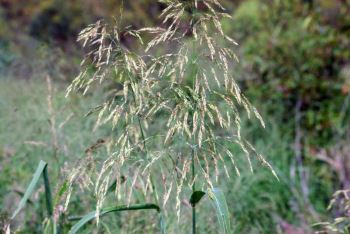
A weedy plant found on the roadside in northern Australia has stems ripe for biofuel production. Scientists from the ARC Centre of Excellence in Plant Cell Walls at the University of Adelaide have discovered that a variety of sorghum growing wild in Australia has the potential to yield over 10,000 liters of bioethanol per hectare per year.
Researchers assessed the stems of 12 varieties of sorghum for sugar content and ease of conversion to bioethanol. These included cultivated varieties and wild relatives, including Arun, which yielded significantly more bioethanol than other varieties.
“Two key advantages of using stem (rather than leaves or grain) to make biofuel is that we can produce this material in low input systems; and as we do not eat this part of the plant we avoid the food versus fuel debate,” says postdoctoral fellow, Caitlin Byrt.
Despite Arun stem containing high levels of a component thought to inhibit bioethanol production, this appears to be negated by a high level of an easily fermentable sugar. Researchers say that a large pool of untapped diversity exists in other species and subspecies of sorghum which opens new avenues of research to generate sorghum lines optimized for biofuel production.
Arcadia Biosciences, Davis, Calif.—an agricultural technology company—is a partner in the Centre’s research and is working to commercialize these findings.
Image caption — A variety of sorghum growing wild in Australia has the potential to yield over 10,000 liters of bioethanol per hectare per year.