Researchers at Eindhoven University of Technology, the Netherlands, are hoping to develop a new cement from steel slag. If successful, more CO2 emissions can be cut than is produced yearly by all the traffic in the Netherlands.
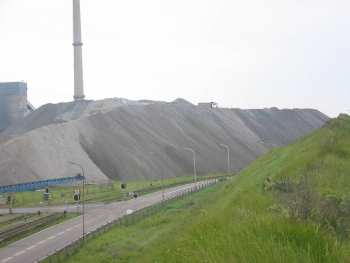
Steel slag is produced by the conversion of raw iron into steel—around 125 million tons of it per year. Much of that is dumped and only a small portion used, in embankments. That’s a shame, says professor Jos Brouwers, because the mineralogical composition very closely resembles that of cement. It contains the same components, but in different ratios. And it is public knowledge that the cement industry emits a very high amount of CO2—5%of the global total. A cement substitute with no extra CO2 emissions would, therefore, be most welcome.
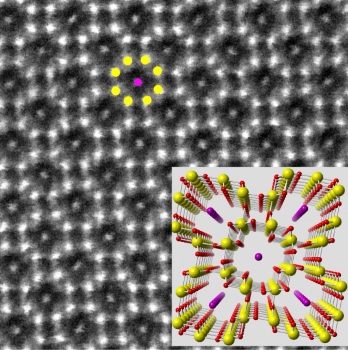
But before this can happen, Brouwers’ team has to overcome a number of scientific and technical hurdles. First, the researchers will use the very latest methods to gain a good picture of the physical and chemical properties of the steel slag as well as take a detailed look at what different additives can bring in terms of cement-like qualities. They will then use this knowledge and computational models to design new types of cement and concrete, and test them out. “It is important that it is possible to change the composition of the steel slag by adjusting the steel production processes,” Brouwers explains. “You can keep the quality of the steel consistent and still ensure that the properties of the steel slag are more favorable.”
Brouwers is hopeful that he will be able to succeed in making cement from steel slag that can replace normal cement. While it may well require twice as much for the same result, this new cement will still be suitable for many common applications. It will make a difference of tens of millions of tons of CO2 emissions each year. For comparison, all the traffic and transport in the Netherlands produces emissions of around thirty million tons a year. Moreover, the new cement is also a money maker. “Steel companies now have to pay for their slag to be removed—it has a negative value. If we succeed, it could mean tens of millions of euros in the Netherlands alone,” says Brouwers.
Image caption — Steel slag stockpile next to a steel factory. Courtesy of Eindhoven University of Technology.