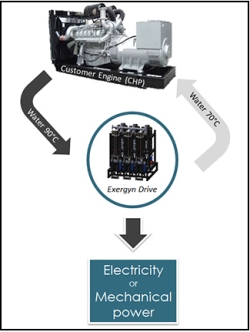
Exergyn, Dublin, Ireland, has developed a new engine called the Exergyn Drive, which turns waste hot water into electricity by means of Nitinol, which undergoes a phase transition when heated and reverts to its original shape when cooled.
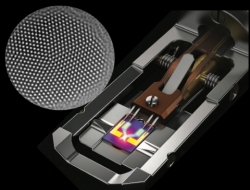
In the drive itself, Nitinol wires attached to a piston are flushed with hot and cold water, expanding and contracting the wires to create a piston movement. The drive is based around a solid-state reciprocating technology that is thermally cycled to deliver rotary motion, and then converted to electricity.
“What makes Exergyn different is our ability to convert heat at less than 100°C to power cost effectively,” says Kevin O’Toole, Director of R&D. “This means we can convert some of the heat in, for example, the radiator circuit of an industrial engine, to additional mechanical or electrical power, as these radiator circuits typically operate with water at 80 to 90°C.”
From 200 kilowatts of thermal energy in the waste hot water, the engine produces ten kilowatts of electricity. Exergyn plans to run industrial trials this year.
“There’s just so much waste hot water in the world,” says Exergyn CEO Alan Healy. “In most cases [companies] are actually spending energy to cool it.”
This type of engine is particularly useful for cargo ships, which typically pump waste hot water around the vessels to cool their engines. Recycling this waste hot water in an efficient manner will help reduce both costs and carbon emissions.