Women in Engineering Profile: Veronique Vitry
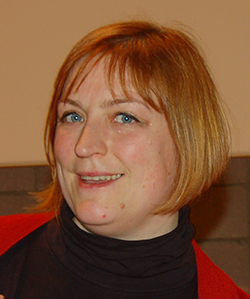
This profile series introduces leading materials scientists from around the world who happen to be females. Here we speak with Véronique Vitry, senior researcher and teaching associate at the Université de Mons (UMONS), in Belgium.
 What does your typical workday look like?
Typically, I take my children to school at 8 a.m. and then head to the office, around the corner. My day consists of a mix of classes, meetings, research, teaching prep work, expertise, and administrative work. At 5 p.m. I’m off to pick up the kids and head home. I usually work one hour or so after dinner grading, reviewing, or reading papers and editing the work of Ph.D. students who I supervise. My job is divided between research and teaching. There is also a service component, which includes helping people from industry and taking part in the organization of the university. I sit on several boards, councils, and committees.
What part of your job do you like most?
I enjoy both teaching and research. Teaching allows me to get students interested in materials engineering. I teach various classes to students in years 3 to 5. University degrees in my country are mandatory 5 year-programs consisting of 3 years of bachelors and 2 years of masters. My classes include process metallurgy (my favorite), nanotechnologies, spectroscopic methods in chemical and materials analysis, and process modeling (my least favorite). It’s always stimulating to see students discover metallurgy, which is something they’ve not typically been exposed to before my class. The best part is the stars in their eyes after visiting a plant. Research allows me the fun of trying to understand how things work. I’m happiest when I’ve just made sense of new observations and am able to relate them to other results, or when I read a new paper that explains something I’ve been curious about.
What attracted you to engineering?
I was always attracted to science and engineering, even as a child. When I was four, I told my mother: “Quand je serai grande je veux être ‘ingéniette,’” which translates in English to “When I’m older, I want to be an engineer-girl.” You can look up the word “ingéniette” in French, however, it does not exist. I made it up because I did not know the feminine form of ‘ingénieur.’
For a little girl who like math and wanted to understand how things worked, engineering was the obvious choice. I discovered chemistry when I was 14 and was immediately hooked. Add that to the fact that several engineers were in my family, and my career path was very clear.
If a young person approached you for career advice about pursuing engineering, what would you tell them?
I would tell them to go for it. It’s a wonderful field that opens a lot of doors and the skills you acquire are invaluable. Engineering is a growing field and the opportunities are endless. Nearly everything in today’s society is based on engineering, including information technology, entertainment, and even healthcare. Engineers are everywhere, even if they stay out of the limelight.
Hobbies?
Reading and music: I play the cello and direct the university’s band.
Last book read?
In French, “Notre-Dame de Paris” by Victor Hugo and in English, “A Column of Fire” by Ken Follett.
Do you know someone who should be featured in an upcoming Women in Engineering profile? Contact Vicki Burt at [email protected].