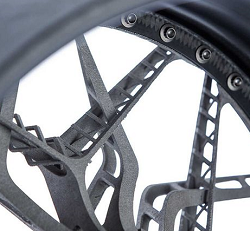
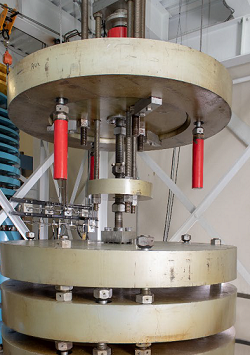
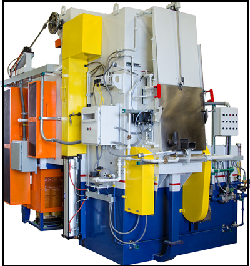
Researchers at the Swiss Federal Laboratories (EMPA) announce that they have developed a joining process in which reactive nano-multilayers join a wide variety of heat-sensitive components without any loss in quality. Adhesives have been the standard for applications where heat required for soldering is not an option. However, joining with reactive nano-multilayers (RNMS) appears to be a promising alternative, producing significantly better joints than adhesives.
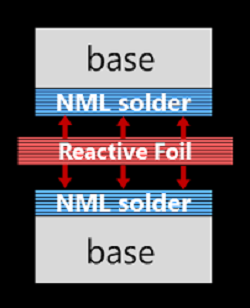
Placing nano-scale metallic layers of foil between component materials together with solder, the foil can be briefly ignited by means of an electric spark or a laser for a fraction of second. The pinpointed area and the short timeframe combined with the reactive foil, melt the solder and securely attach the materials without damage to any heat-sensitive components.
Researchers reiterate that there is no universal approach when joining with RNMS. The choice of materials results in wide variation in application of the RNMS process. Copper, for example, is an excellent heat conductor and allows large amounts of the heat generated by the foil to drain away rapidly. Glass, on the other hand, a poor heat conductor, behaves in the opposite way: it can enable a pile-up of the reaction heat, which can lead to cracking of the glass due to local overheating.
Empa’s Joining Technology and Corrosion Department has applied this understanding of how a certain material behaves to adapt the process accordingly, resulting in success in joining materials with vastly different properties, including joining copper with glass without damage from heat or thermal stress.
The scientists have worked together with the Hahn Schickard Society for Applied Research in Villingen-Schwenningen in an “interreg” project – the EU regional program for the promotion of cross-border cooperation – to increase their combined knowledge for joining sensitive components with the RNMS method.