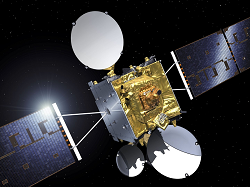
Materion Corp., Mayfield Heights, Ohio, and Synopta GmbH, Switzerland, announce the successful completion of the latest satellite as part of the Copernicus Earth observation project—a European initiative that monitors the changing conditions and general heath of the planet. Materion provided the advanced materials in the optical communication system on board the satellites, including the most recent that launched in August 2019.
Copernicus, a European Union program, provides timely and accessible information about global temperature changes, atmospheric pollution, deforestation, urbanization and more by sending high resolution pictures to Earth.
Synopta GmbH was tasked with developing elements of a reliable, high-speed data transmission system for the program’s Sentinel and the European Data Relay System (EDRS) satellites. Synopta selected Materion’s AlBeMet and SupremEX metal matrix composites for service in critical parts of the satellites’ laser communication terminal.
“Both AlBeMet and SupremEX materials from Materion have a unique property set that enabled us to design and produce a light-weight, high-precision system,” said Jens Kunde, General Manager, Synopta. “Low mass and high stiffness were priorities for us, and these composites offered both.”
In August 2019 the latest Copernicus project satellite, EDRS-C, was successfully launched with components made of Materion metal matrix composites on board. This most recent satellite will contribute to the almost-live transmission of data to Earth, enabling faster response times to emergency situations.
In addition to this project, AlBeMet and SupremEX materials have been used successfully in space applications for over 60 years due to their unique properties, which include a high strength-to-weight ratio and stiffness.