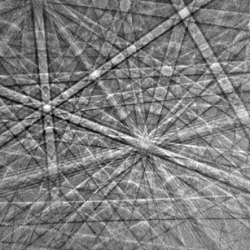
EDAX, Mahwah, N.J., is planning to release the Clarity electron backscatter diffraction (EBSD) detector, the world’s first commercial EBSD-specific detector based on direct electron detection technology. Direct detection has made a significant impact in the microscopy community, and the Clarity is the culmination of efforts to bring this technology to EBSD collection. It provides patterns of the highest quality, and sensitivity with no detector read noise and no distortions for optimal performance.
Direct detection of electrons for collecting EBSD patterns is a return to its origins. The first experiments to detect EBSD patterns used photographic film. Electrons interacted directly with the film to produce high quality EBSD patterns, but this was slow for multiple patterns. This changed with the introduction of analog and then digital cameras coupled with a phosphor screen, which converts the electrons into light photons.
This step allowed for the adoption of even better camera technology to improve the sensitivity and speed of data collection over the years. As a result, EBSD detectors have been developed to make pattern detection simpler, faster, more convenient.
However, the detection path that the signal must travel has some drawbacks. The electron-to-photon conversion is affected by the grain size of the phosphorescent material and film thickness on the screen, and has conversion efficiencies and localized blooming of the signal. The requirement of high sensitivity means that the use of a lens system with the largest possible aperture is desirable, and the trade-off is that small imaging artefacts are introduced because lenses are never perfect.
For Hough-based indexing, such small imperfections do not matter, but they do limit the detail for quantitative analysis of the pattern. Direct electron detection removes all these steps and corresponding issues from the collection chain.
Image shows EBSD pattern from silicon using the Clarity detector.