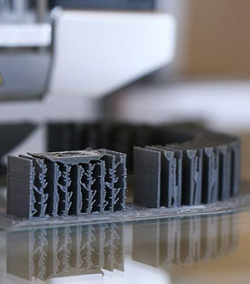
Engineers from the University of Ottawa have designed a hybrid additive manufacturing technology that can help to prevent delamination of soft and ductile materials from hard substrates.
Delamination is a challenge when using the cold spray process. Typically, additional heat treatment processes have been used to address this problem. Unfortunately, to produce significant improvements, long and extensive heat treatments are required. As a potential solution to this issue, a tunable hybrid additive manufacturing process has been developed by coupling induction heating and low pressure cold spray processes.
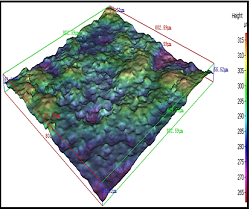
Pure aluminum served as the soft feedstock powder, while Ti-6Al-4V was used for the hard substrate. Substrates were preheated at temperatures of 200°C, 400°C, and 600°C to accelerate the in-situ sintering process. Deposition efficiency, micro-hardness, adhesion strength, and tensile strength were evaluated to characterize the in-situ sintering effect.
It was observed that the deposition efficiency was doubled with the hybrid process, compared to the traditional low pressure cold spray process. Additionally, the resulting adhesion strength was increased by a factor of 70, while the coating micro-hardness was reduced by 20%.
Finally, the tensile strength specimens produced by the hybrid process reached a 2% total elongation, compared to 0.8% for the traditional process. These results open up the possibility of using this hybrid technique as an additive manufacturing process for coatings and bulk parts production.
www.uottawa.ca