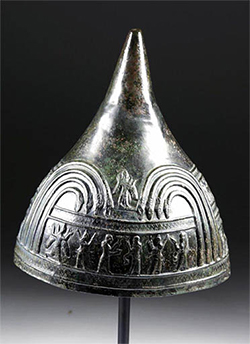
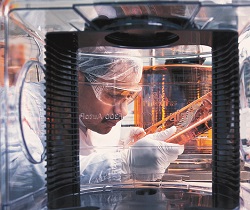
Artemis Testing Lab, Louisville, Colo., utilizes handheld XRF analyzers and thermoluminescence while working with galleries and dealers that need to perform materials analysis. The lab uses XRF analyzers to quickly identify the elemental composition of metal artifacts, determining the approximate age. The thermoluminescence technique can evaluate the age of archeological pottery by measuring the accumulated radiation dose in the object.
Since XRF is non-destructive, fast, and can analyze a wide range of materials, Artemis Testing Lab finds it’s a safe choice for evaluating rare artifacts to determine the elemental composition of an object. This information helps them determine a more accurate age for the pottery and metal artifacts.
For example, prior to 1500, brass did not contain more than 28% zinc. That means a supposed Roman item that contains 35% or 40% zinc in brass is impossible during that time. While this analysis can’t provide an exact age, it can help verify if the composition aligns with the time period. Other materials commonly found in XRF analyzed art and artifacts include iron, steel, silver, gold, bronze, copper, and platinum.
For more information: Artemis Testing Lab