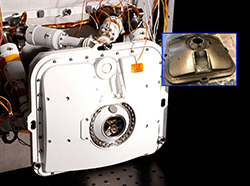
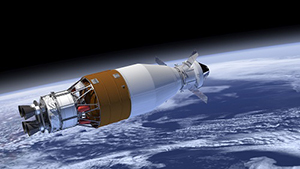
NASA’s Perseverance rover, scheduled to land on Mars on Feb. 18, carries 11 metal parts manufactured with 3D printing. Instead of forging, molding, or cutting materials, 3D printing relies on lasers to melt powder in successive layers to give shape to something. This allows engineers to play with unique designs and traits, such as making hardware lighter, stronger, or responsive to heat or cold.
“It’s like working with paper-mâché,” said Andre Pate, the group lead for additive manufacturing at NASA’s Jet Propulsion Laboratory in Southern California. “You build each feature layer by layer, and soon you have a detailed part.”
The 3D-printed parts are all found within two instruments: PIXL and MOXIE. These are both secondary structures which means they won’t jeopardize the mission if they fail to work as planned.
Curiosity, Perseverance’s predecessor, was the first mission to take 3D printing to Mars. It landed in 2012 with a 3D-printed ceramic part inside the rover’s oven-like Sample Analysis at Mars instrument. NASA has since continued to test 3D printing for use in spacecraft to make sure the reliability of the parts is well understood.
A key objective of Perseverance’s mission on Mars is astrobiology, including the search for signs of ancient microbial life. The rover will characterize the planet’s geology and past climate, pave the way for human exploration of Mars, and be the first mission to collect and cache Martian rock and regolith.
For more information: NASA