The National Science Foundation awarded a $661,462 Major Research Instrumentation grant to the University of Maine to upgrade a multiuser instrument in the Climate Change Institute.
Over the last two decades, the University of Maine Climate Change Institute’s ICP-MS facility has conducted valuable climate, environmental, ecosystem, and engineering research and training across the state of Maine and beyond. The instrument that made that possible is the Thermo Scientific Element2 ICP-MS, an instrument for the analysis and quantification of trace elements that can be used for a variety of applications, from biological research to materials science. However, UMaine’s instrument has been heavily used and at the end of its operational lifetime.
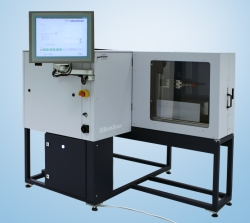
The NSF grant will be used to expand the capabilities of the ICP-MS Facility through the acquisition of a new and improved instrument: the Thermo Scientific Element XR extended dynamic range high-resolution ICP-MS with a Jet Interface for analysis of aqueous samples, supplemented with an ESL NWR193UC laser ablation front end for ice, biological and other solid materials.
“The state-of-the-art ElementXR will allow us to push much farther on research questions that many of us are already working on. Adding laser ablation to the system allows us to ask and pursue a whole new set of questions, which in many cases will be ones that we don’t even know yet,” says Karl Kreutz, director of the School of Earth and Climate Sciences, professor in the Climate Change Institute and the principal investigator on the project.
The Element XR will allow major gains in elemental and isotopic analysis by providing lower elemental detection limits and concentrations, higher sensitivity and improved isotope ratio precision. It will be used by UMaine researchers at all levels — from undergraduate and graduate students to faculty — in three primary fields: glaciochemistry and climate/environmental reconstruction; paleoceanography and marine biogeochemistry; and environmental sensor development and material science engineering.
“The proposal and grant have already created exciting new collaborations between CCI and Engineering in materials science. The new instrumentation has such a wide range of capabilities which we hope will continue to foster these new connections across UMaine and the state,” says Kreutz.
For more information: UMaine