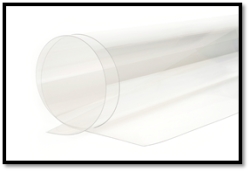
With smart materials being one of the fastest growing areas of materials technology, Saudi Basic Industries Corp. (SABIC), Riyadh, and Cima NanoTech, St. Paul, Minn., jointly developed a plastics industry first—a transparent conductive polycarbonate film that has the potential to revolutionize the materials used in consumer electronics, household goods, automotive, architecture, and healthcare.
The new material, designed to provide next generation functionality, has the potential to further enhance performance, enable new innovative applications and open doors for new product designs. This could translate into faster response touch screens for consumer electronics, transparent no-line anti-fogging capabilities for automotive windows, better EMI shielding effectiveness for electronics, and transparent WiFi/Bluetooth antennas for mobile devices like smartphones, tablets, laptops, and all-in-one computers.
Aligned with SABIC’s focus to provide solutions that will solve industry challenges, SABIC engaged in a joint collaboration with Cima NanoTech in the latter half of 2013 to develop the promising new material, which is currently available for customer trials.
“Transparent conductive polycarbonate is a breakthrough material that customers in consumer electronics and other important industries have been seeking,” Matt Gray, director of marketing, consumer electronics for SABIC’s Innovative Plastics business, said. “Our work with Cima NanoTech is strategically aligned with our commitment to continuous innovation in areas of importance to our customers.”
Cima NanoTech’s proprietary SANTE nanoparticle technology combined with SABIC’s world-renowned LEXAN film, a polycarbonate material, resulted in the development of a new series of transparent conductive materials that are lightweight with excellent transparency, outstanding conductivity, and high flexibility. The new materials not only meet the requirements of existing industries, but also stretch the possibilities for exciting opportunities by breaking boundaries faced with current materials.
SANTE technology, a patented self-assembling nanoparticle technology platform, stands alone in providing high transparency with ultra-low electrical resistance, which is ten times better than the incumbent indium tin oxide (ITO). “In addition to its ability to meet optical grade specifications for display and touch applications, SANTE nanoparticle technology is also more cost effective as coating is performed via a wet coating, roll-to-roll process versus sheet-to-sheet,” says Jon Brodd CEO of Cima NanoTech. The conductive SANTE network is also mechanically robust, thus allowing it to withstand flexing, stretching, torsion and tension for flexible applications. The substrate can also be thermoformed into various curved and 3D form factors.