Rolls-Royce chose Bristol as the location for a center of advanced fan system composite technology development, creating a hub of composite knowledge in the UK. The hub will benefit from manufacturing techniques being developed in partnership with the National Composites Centre (NCC), part of the University of Bristol.
It will also be boosted by research being conducted at the university’s Rolls-Royce Composites University Technology Centre to provide validated analysis methods for the design and manufacture of composites components. The advanced manufacturing facility is at the forefront of developing the next generation of fan blades and fan cases, made of carbon-fiber composite materials, for Rolls-Royce’s future aero-engines.
Rolls-Royce CTi (carbon/titanium) blades are a key feature of the new advance engine design, unveiled last year, which will offer at least 20% less fuel burn and CO2 emissions than the first generation of the Trent aero-engine. The blades and associated composite engine casings will form part of the new CTi fan system that could reduce weight by up to 1500 lb per aircraft, the equivalent of carrying seven more passengers and their luggage.
Processes used in their CTi manufacturing technology capability on the Isle of Wight composites facility were developed within Rolls-Royce and through work carried out at the NCC, a world-leading research and technology hub owned by the University of Bristol. The development work on the CTi (carbon/titanium) blade manufacturing technology has led to their decision to locate the center for advanced fan system composite technology development in Bristol.
The pre-production facility will be developed within an existing building alongside Rolls-Royce’s new facility for carbon-fiber electrical harness rafts. Tony Wood, president of Aerospace at Rolls-Royce, says: “This state-of-the-art facility will give us the opportunity to further develop our world-leading composite technology and manufacturing techniques for our next generation of engine design. These high-technology lightweight components have the potential to significantly improve the fuel consumption and emissions of future aircraft through our new Rolls-Royce Advance and UltraFan demonstrators.
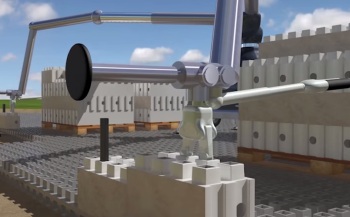
Carbon-fiber composites are predominantly used in the aerospace industry to enable significant reduction in weight, leading to lower fuel consumption and reduced emissions. Rolls-Royce has been involved in developing carbon-fiber technologies for several decades and already uses the material for a number of parts within its aero engines. Innovative automated methods have been developed specifically for producing composite fan blades and fan casings.
Rolls-Royce has been involved in developing carbon-fiber technologies for several decades and already uses the material for a number of parts within its aero engines. Innovative automated methods have been developed specifically for producing composite fan blades and fan casings.