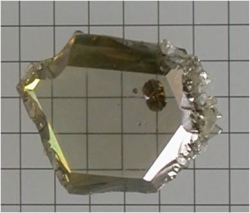
Researchers at the University of Arkansas, Fayetteville, have received a $200,000 grant to study the modeling of gallium nitride devices. Gallium nitride offers significant efficiency advantages over conventional silicon in power conversion systems. One barrier to GaN application is a lack of high-quality models for circuit simulation. These models allow designers to evaluate them against the entrenched silicon technology.
GaN is a mechanically stable semiconductor material with high heat capacity and high thermal conductivity. It could lead to the development of devices that can operate at higher voltages, temperatures, and switching frequencies than those currently made of silicon. However, the lack of models makes it very difficult for circuit designers to accurately portray how gallium nitride devices will function.
Alan Mantooth, Distinguished Professor of electrical engineering and executive director of the Grid-connected Advanced Power Electronic Systems Center, will lead the effort. Researchers at the center work to accelerate the adoption and insertion of power electronics into the electric power grid. Improvements in these devices will ultimately lead to lower costs for consumers and a substantial reduction in carbon emissions.
The grant allows the scientists to develop and evaluate a high-performance compact model for gallium nitride power devices. Compact models are used by circuit designers to simulate the performance and function of their designs before committing them to manufacture. These models are especially important in power electronic applications where many real-world scenarios can be analyzed safely. Further, statistical and failure mode analyses, which are practically impossible through experimentation, can be easily implemented.