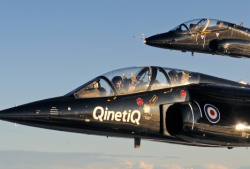
Qinetiq, England, introduces an impact-resistant composite material in which highly energy-absorbent shape-memory titanium alloy wires are woven into a carbon fiber-reinforced polymer. Announced at the Farnborough International Airshow in England, the company says that the material could make aircraft structures three times more resistant to impacts such as bird and drone strikes.
Qinetiq has reportedly carried out tests simulating collisions with an aircraft’s leading edges, such as the nose and wings, which showed a threefold increase in strength compared to normal carbon fiber of the same mass.
Tests conducted in collaboration with GE Aviation and the U.K. National Composites Centre (NCC) have shown similar potential for protecting against burst tires and other debris that can be thrown up into the underside of an aircraft from a runway.
“Most existing safety measures require extra material to be added to vulnerable areas, adding mass and compromising the aircraft’s efficiency,” says Andrew Foreman, Head of Engineering Research & Consultancy at Qinetiq. “This patented composite would enable operators to meet or exceed the same high regulatory standards without adding mass. A lighter aircraft uses less fuel, providing opportunities for lower emissions, higher airline profits, and reduced fares for travelers. Qinetiq’s heritage lies in Farnborough’s Royal Aircraft Establishment, which revolutionized composite materials technology with the invention of carbon fiber in 1963. We are proud to continue that legacy, using cutting-edge innovation to maximize safety and efficiency for our customers in the aviation industry.”