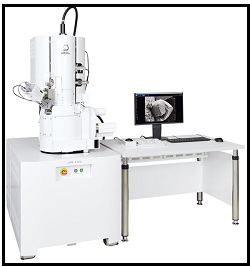
Oxford Instruments Asylum Research, Santa Barbara, Calif., announces development of an interferometric displacement sensor (IDS) that provides a direct measure of AFM cantilever displacement. The IDS interfaces the existing optical system of the Asylum Research Cypher AFM with an external laser Doppler vibrometer. It does not replace the standard laser and detector; rather, it provides a complementary detection method that measures the true tip displacement.
Asylum Research pioneered the introduction of ultra-low noise position sensors as a standard feature on every AFM. Somewhat ironically, though, an equally critical measurement axis, the cantilever displacement, has been neglected. Asylum AFMs and virtually all other commercial AFMs still rely on an indirect measure of cantilever displacement. The optical beam deflection (or “beam bounce”) technique, in which a laser is reflected off the back of the AFM cantilever and on to a position sensitive detector, is relatively easy to implement and impressively low-noise across a wide dynamic range. However, it is fundamentally proportional to changes in the angle of the cantilever and is therefore only indirectly related to the tip displacement. While this measurement technique works remarkably well for some AFM imaging modes, in others, such as piezoresponse force microscopy (PFM), it is known to contribute to significant errors in quantitative analysis.
“Asylum Research was founded on the principle that through careful design, atomic force microscopy can be subject to fewer artifacts and give more quantitative results,” said Asylum Research president Dr. Roger Proksch. “One of Asylum’s core technical strengths is in supporting the fields of piezoelectric and ferroelectric materials research. We’re therefore especially proud to be reinforcing this capability, giving our customers a new and exciting path to more accurate electromechanical measurements. However, we believe the IDS option will also prove useful in characterizing and advancing techniques for nanomechanics, as well as improving our fundamental understanding of the capabilities and possibilities of AFM.”