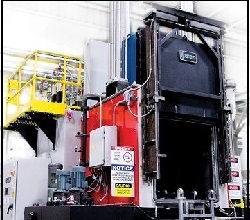
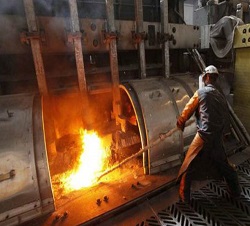
Carburizing and quenching are two common, and often essential, processes performed in atmosphere heat-treating systems. These processes have similar goals: to carburize parts uniformly, and to produce a uniform quench – all with minimal part distortion.
Distortion is a term for all types of irreversible dimensional changes that occur in a workpiece. Two common types of distortion occur during the heat treatment process: size distortion and shape distortion. Total size distortion is the sum of distortions arising during the heat treatment cycle. Shape distortion is created by non-uniformity of temperature during phase transformation.
This paper will discuss the five main reasons that distortion and cracking occur during atmosphere heat treatment and oil quenching in integral-quench batch furnaces.
It will also explore best practices for addressing these issues and refining the carburizing and quenching processes. As a result, you will be able to minimize part distortion during the atmosphere heat treatment process, all with the ultimate goal of reducing or eliminating the associated post-treatment steps and manufacturing costs associated with correcting distortion.
Janusz Kowalewski , Ipsen USA, Cherry Valley, Illinois
Wednesday, June 6, 2018: 11:30 AM, Heritage D (Spartanburg Marriott)
Thermal Processing in Motion conference
June 5-7, 2018, Spartanburg, South Carolina
Learn more and register here:
https://www.asminternational.org/web/thermal-processing-in-motion/home