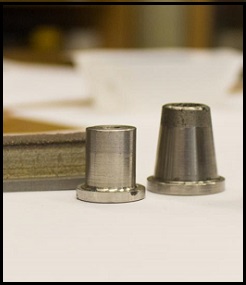
Washington State University, Pullman, announces that its engineers have developed a technology that may help manufacturers reduce the number of production steps with a single machine that could 3D print complex structures with multiple parts in one operation. The researchers 3D printed metal and ceramic structures and a bimetallic tube that is magnetic in one end and nonmagnetic in the other. The report on their work is published in the May issue of Additive Manufacturing.
Three-dimensional printing has changed the landscapes of many industrial practices and has significantly influenced product design protocols. Anyone who wants a custom part can design it on a computer and then simply print it.
However, manufacturers can put only one material into a printer. With the ability to print more than one material at a time, they will be able to better control properties such as heat conduction, corrosion protection, and environmental adaptation. Multimaterial 3D printing eliminates the need for adhesives or joint connections that are now required for multimaterial products.
The researchers used a laser-based 3D printer to join the materials in a single step, printing out a nickel-chromium and copper structure. Inconel 718 is a nickel-chromium alloy used in liquid-fueled rockets and for sheet metal parts for airplane engines. The material is able to withstand high temperatures well, but it cools very slowly. When the researchers added the copper in the 3D printing process, the part could be cooled 250 percent faster, meaning a longer life and higher fuel efficiency for airplane engines.