The University of Pittsburgh and General Carbide Corp., Greensburg, Pa., report that recent awards from the state of Pennsylvania will enable research into improving tungsten carbide powders and developing 3D printing methods for more effective and economical additive manufacturing.
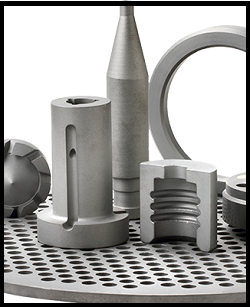
Tungsten carbide is one of the most versatile metal compounds and is renowned for its durability and strength, making it perfect for cutting tools, boring machines, and surgical instruments. Although it would seem ideal for additive manufacturing, tungsten carbide is susceptible to fractures and breakage when exposed to the extreme laser heat used in printing metal powders.
“Additive manufacturing is increasingly adopted by industry to build highly complex metal parts, but the rapid local heating and cooling during energy beam-based 3D metal printing produces large thermal gradients that cause tungsten carbide to crack,” explains principal investigator Markus Chmielus, Pitt assistant professor. “Binder jet 3D printing is more effective because it selectively joins powder particles with a binder, one microscopic layer on top of another, without any temperature fluctuations during printing.”
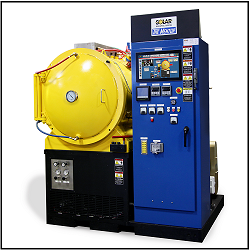
Still key to utilizing tungsten carbide, however, is that after a part is printed, it needs to withstand sintering and potentially HIP. Therefore, Dr. Chmielus and General Carbide will investigate various tungsten carbide base powders that can be utilized in a binder jet 3D printer, as well as optimize the printing process and subsequent sintering and HIP.
The project is financed in part by a $57,529 grant from the Commonwealth of Pennsylvania’s Department of Community and Economic Development (DCED) and the first round of the PA Manufacturing Innovation Program (PAMIP). Cost share from Pitt’s Swanson School of Engineering and General Carbide will provide a total funding of $145,000.