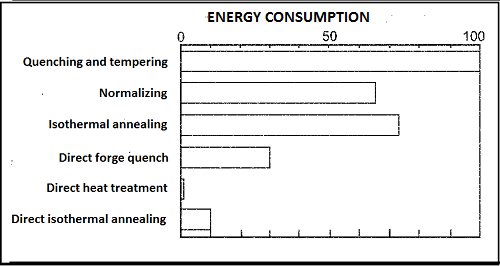
In direct-forge quenching and tempering processes, the increase in hardenability results primarily from grain coarsening. Due to the hardenability increase, carbon concentration can be reduced to achieve specified hardness and also prevent quench cracking. A considerable percentage of automotive forging products were converted to DFQ processes in the 1960s.
A fine-grained microstructure is fundamental for toughness, and technologies for grain refinement and stronger properties were therefore investigated. Microalloying technologies developed for high-tensile-strength steel sheets were implemented to advance DHT processes.
Gradually, since the 1970s, the use of microalloyed steels for DHT has become popular and many components have been produced by DFQ processes that have been converted to DHT processes. In DHT processes it is necessary to produce various microstructures to meet the needs of specific applications. Depending on the specifications of the components, especially the microstructure and hardness, the postforging cooling condition should be optimized to produce the required properties.
For more information, click on the link below (subscription required). Then scroll down the Chapter Contents column on the left of the page, and click on “Definition and Purposes of Direct Forging and Heat Treatment.” Then scroll to “Types of Postforging Direct Heat Treatment Processes.”