Researchers at the University of Birmingham, England, announce that they have developed an antimicrobial peptide coating that adheres to steel after the surface has been modified by a specially-designed surface engineering process to activate the metal. It is said to bond antimicrobial actives and disinfectants to both metal and plastic surfaces. Called NitroPep, the technology was developed and patented by research teams at the University of Birmingham for use on door handles, push plates, and grab rails.
Working with the Royal Centre for Defence Medicine and the Royal Navy, the researchers conducted a clinical trial which saw NitroPep coated on steel surfaces – including door handles, an operating theatre, and part of a communal toilet – on board a Royal Fleet Auxiliary ship.
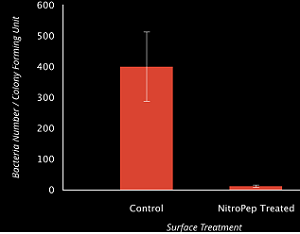
Both the surfaces coated in NitroPep, and ‘control’ surfaces that were not treated with the coating, were subject to standard daily cleaning regimes while the ship was at sea for 11 months.
The results showed that the coating was effective against five different bacteria that are responsible for hospital-acquired infections – Staphylococcus aureus, Staphylococcus epidermidis, Enterococcus, Pseudomonas aeruginosa and Escherichia coli.
The research also showed that the coating killed bacteria within 45 minutes – far more rapidly than currently commercially available technologies, which do not have a significant effect on bacteria until up to 24 hours. It is also proven to work for a minimum of three years between each treatment, proving to be both less labor-intensive and more cost-effective than current alternatives. It works continuously and without a detrimental impact on aesthetics.