University of Sydney researchers have made a significant discovery in the field of materials science, for the first time providing a full picture of how fatigue in ferroelectric materials occurs.
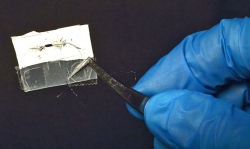
Ferroelectric materials are used in many devices, including memories, capacitors, actuators, and sensors. These devices are commonly used in both consumer and industrial instruments, such as computers, medical ultrasound equipment, and underwater sonars.
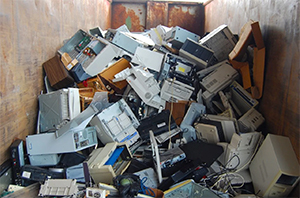
Over time, ferroelectric materials are subjected to repeated mechanical and electrical loading, leading to a progressive decrease in their functionality, ultimately resulting in failure. This process is referred to as ‘ferroelectric fatigue’. It is a main cause of the failure of a range of electronic devices, with discarded electronics a leading contributor to e-waste. Globally, tens of millions of tons of failed electronic devices go to landfills every year.
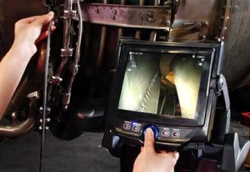
Using advanced in-situ electron microscopy, the School of Aerospace, Mechanical, and Mechatronic Engineering researchers were able to observe ferroelectric fatigue as it occurred. This technique uses an advanced microscope to ‘see’, in real-time, down to the nanoscale and atomic levels.
The researchers hope this new observation, described in a paper published in Nature Communications, will help better inform the future design of ferroelectric nanodevices.
“Our discovery is a significant scientific breakthrough as it shows a clear picture of how the ferroelectric degradation process is present at the nanoscale,” said co-author professor Xiaozhou Liao, also from the University of Sydney Nano Institute
For more information: The University of Sydney