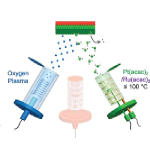
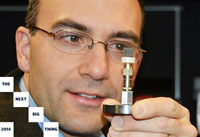
University of Minnesota, Minneapolis, researchers have invented a cheaper, safer, and simpler technology that will allow a group of metals and metal oxides to evaporate at temperatures lower than 200 C, much lower than current working temperatures. This will be useful for all metallic coatings including thin films used in electronics, computer components, metal finishing, corrosion resistance, and other applications.
Metals like platinum, iridium, ruthenium, and tungsten, among others, are very difficult to convert into thin films because they require extremely high temperatures of more than 2000 degrees Celsius to evaporate. Typically, scientists synthesize these metal films using techniques like sputtering and electron beam evaporation. The latter consists of melting and evaporating metals at high temperatures and allowing a film to form on top of wafers. But, this conventional method is very expensive, uses a lot of energy, and may also be unsafe due to the high voltage used.
By designing and adding organic ligands—combinations of carbon, hydrogen, and oxygen atoms—to the metals, the researchers were able to substantially increase the materials’ vapor pressures, making them easier to evaporate at lower temperatures. Not only is the new technique simpler, but it also makes higher quality materials that are easily scalable. Bringing down the cost and complexity of metal deposition while also allowing for deposition of more complex materials like oxides will play a large role in both industrial and research efforts.
Read further here.