When current flows through a wire, it doesn’t always have a perfect path. Tiny defects within the wire mean current must travel a more circuitous route, a problem for engineers and manufacturers seeking reliable equipment.
Through a partnership with industry, researchers at the FAMU-FSU College of Engineering and Florida State University’s Center for Advanced Power Systems and the National High Magnetic Field Laboratory developed a cable design that uses multiple strands of superconducting tape, minimizing the chance of failure from defective spots within a wire. When current encounters a defect in one wire, it jumps to a neighboring wire to continue moving.
The research, published in Superconductor Science and Technology, helps to solve engineering and manufacturing challenges for manufacturers and could lead to more efficient and less expensive wires for electric motors and many other superconducting coil applications.
“By partnering with Advanced Conductor Technologies, not only are we supporting the development of a new, innovative idea, but we also have a way to transition the technology quickly to applications,” said co-author Sastry Pamidi, interim director of the Center for Advanced Power Systems and chair of the Department of Electrical and Computer Engineering. “The research we’re doing directly translates into low-cost superconducting wire and mitigates equipment failure due to defects in the conductor.”
Through previous work with Colorado-based Advanced Conductor Technologies, or ACT, Pamidi’s team supported the development of a superconducting wire technology called Conductor on Round Core (CORC) wire, which served as a foundation for ready-to-use superconducting coils that rely on helium gas for cooling instead of liquid nitrogen. The change gives engineers more design flexibility because helium remains in a gas phase over a wider range of temperatures than other media.
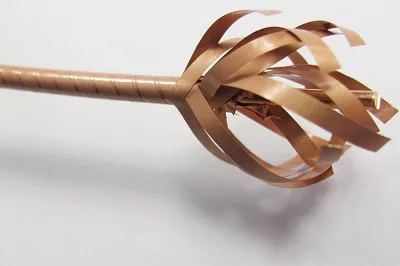
CORC wires are made by winding bands of multiple superconducting tapes in a spiral shape. Instead of soldering the tapes together, they rely on pressure between the tapes to let electricity flow from one to another. This keeps the wire flexible and strong under tension.
If defects are distributed randomly through a wire, they’re unlikely to cluster in one location in a cable. In a process called current sharing, current jumps from one wire to another when it encounters a defect. That allows manufacturers to use more of the wire they make, minimizing waste and lowering costs.
Superconducting wires have numerous applications: electrical motors and generators, electric airplanes, ships, medical equipment, fusion power plants, artificial intelligence data centers, power transmission lines, high-energy physics experimental facilities and more. Anywhere engineers want electricity to move, superconducting wires can move it without losses, allowing for more efficient machines and magnet systems, including magnetic levitation used in high-speed trains.
But making superconducting wires is challenging. The manufacturing process inevitably introduces some defects in the wire. The traditional solution to that problem has been to solder multiple pieces together to create a long length of defect-free wire. Combining wires into cables, like in the solution optimized by the partnership of FSU, ACT, and SuperPower, is a way to get the benefits of superconducting wires at a lower cost.
“We are very happy to see the outcome from this work,” said Yifei Zhang, vice president of research and development at SuperPower. ”Thanks to the unique structure of CORC and the way the cables in this work were fabricated, the project successfully demonstrated that the coils made with the VIC wires, wires that were considered defective, achieved equivalent performance as the coils that were made with almost perfect wires. This result can change the way the wire production yield is calculated, which will lead to a significant reduction in wire cost.”
The earliest superconductors needed extremely low temperatures, close to absolute zero, to function. Pamidi and other CAPS researchers are developing new technologies for high-temperature superconducting wires, which can carry current without resistance at temperatures as high as 77 Kelvin, which makes simpler and more affordable applications for this technology possible.
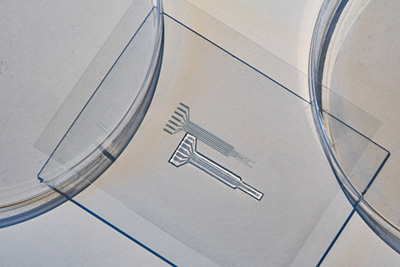
Image – Developed through a partnership with industry, the research will help improve efficiency and resiliency for technology used in next-generation electric motors and other applications.
For more information:
Florida State University
https://eng.famu.fsu.edu/