The University of Tennessee, Knoxville’s Defense Development and Applied Research Center (DARC), in partnership with the Tennessee Army National Guard and the DEVCOM Army Research Laboratory (ARL), selected the deployable cold spray metal additive manufacturing technology from SPEE3D, Australia, for a live mission scenario built around a disabled MRAP combat support vehicle.
On a Tennessee training range, this critical combat support vehicle sat “deadlined” and effectively out of the fight. A failed battle lock handle had disabled the armored door’s locking mechanism, leaving it vulnerable to being forced open from the outside. Without a functioning handle, the vehicle could not safely return to base, leaving the crew at risk and the platform sidelined at the time it was needed most.
Across the U.S. Army, that scenario is a familiar logistics problem. When a critical component fails in a contested or remote environment and the repair part isn’t available at a forward logistical site, the standard response is to order a replacement from the original equipment manufacturer and wait for it to work its way through depots, airlift and convoys to the unit. That process can take six to ten weeks. During this time, the vehicle remains non-mission-capable, and any resupply movements carry their own operational risk.
Recognizing the need for greater agility and resilience in military sustainment, the U.S. Secretary of War has directed the expansion of advanced manufacturing, including 3D printing, within operational units by 2026. In this exercise, the question was straightforward: could a critical part be designed, produced, and delivered fast enough to restore a deadlined vehicle under realistic field conditions?
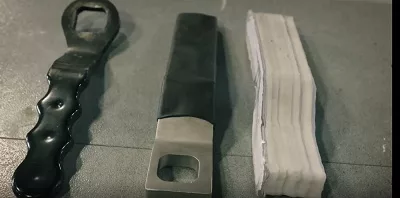
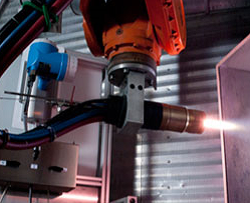
During the exercise, soldiers from the Tennessee Army National Guard, supported by UTK engineers, operated SPEE3D’s Expeditionary Manufacturing Unit (EMU). Working from the field, they used the system to design, print, heat-treat, and machine a replacement battle lock handle using the Cold Spray Additive Manufacturing (CSAM) process. The part was produced and installed in less than 10 hours, returning the vehicle to service within the scenario.
For the mission profile, the team added an additional operational constraint. Instead of moving the component by convoy through contested terrain, a drone transported the newly manufactured handle over remote, otherwise undrivable ground directly to the stranded vehicle and its crew. A logistics chain that would typically stretch over six weeks was compressed into a single-day mission, with the crew able to retrieve the part, complete the repair and drive the vehicle back to safety.
“Waiting weeks for a replacement part isn’t just a logistical delay, it’s a tactical vulnerability for the military. Our technology is there to empower soldiers with true right-to-repair capabilities at the point of need. This demonstration is an example of how our expeditionary manufacturing technology does not just fix vehicles but strengthens mission readiness and gets warfighters back in the fight safely and effectively,” says Byron Kennedy, SPEE3D CEO.
The exercise did not stop at a single Battle Lock Handle. Over the course of the trial, soldiers and researchers used our EMU to produce multiple components that directly affect survivability and readiness, including an exhaust cover for a generator powering MEDEVAC equipment, and mounting brackets for a battlefield display used to prevent friendly-fire incidents. Traditionally, such failures might require ordering entire assemblies at significant cost. With our EMU, units can efficiently and cost-effectively manufacture only the parts they actually need, on demand.
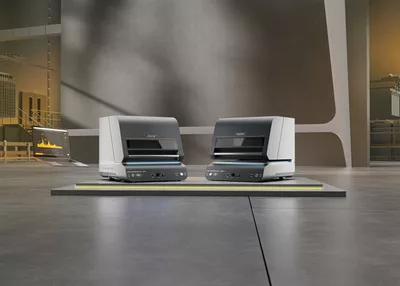
Beyond the immediate vehicle repair, the exercise delivered condensed, hands-on training for Tennessee Army National Guard soldiers. Participants with limited prior exposure to additive manufacturing were able to learn the workflow, operate our EMU and produce parts within the timeframe of the trial. Going forward, the University of Tennessee, Knoxville will use a XSPEE3D expeditionary metal 3D printer to train military operators in realistic scenarios, from remote field environments to rapid-response situations, helping future personnel develop the capability to independently produce critical parts at the point of need.
The university has also acquired one TitanSPEE3D metal 3D printer, enabling rapid production of large, custom metal parts that would traditionally require casting. Together, the TitanSPEE3D and XSPEE3D systems position UTK’s DARC to advance both research and production in cold spray metal additive manufacturing, supporting military requirements while expanding training and research opportunities for students.
Image – Left to right: Original MRAP battle lock handle component next to Cold Spray additively manufactured finished replacement and initial print variations using the SPEE3D Expeditionary Manufacturing Unit (EMU).
For more information:
SPEE3D
https://www.spee3d.com/
University of Tennessee Knoxville
https://www.utk.edu/