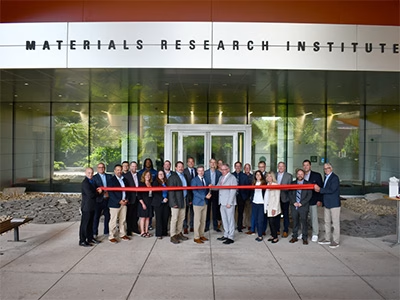
Penn State and Kurt J. Lesker Company have launched a strategic partnership to advance atomic-scale materials processing for semiconductors, advanced packaging, quantum technologies and photonics. Central to the collaboration is the new Kurt J. Lesker Company Atomic Scale Processing Center of Excellence, known as ASPIRE, at Penn State. The center will combine the company’s equipment and process expertise with Penn State’s nanofabrication, materials research and characterization capabilities to support next-generation technology development and workforce training. The partnership was formally launched Sept. 9 with the signing of a memorandum of understanding and a ribbon-cutting ceremony at the Millennium Science
KJLC is a Pennsylvania-based company specializing in vacuum science and equipment used to create and shape extremely thin layers of materials. These thin films are essential components in semiconductors and other advanced technologies.
A central goal of the partnership is to develop and validate atomic-scale processing recipes, or detailed instructions for creating thin films with specific properties. These recipes could ultimately be shared with KJLC customers and academic researchers around the world.
The partnership builds on a research relationship, demonstrating the world’s first ferroelectric aluminum-scandium nitride thin films grown by plasma-enhanced atomic layer deposition. The achievement highlights the role of atomic scale processing in enabling next-generation semiconductor, quantum and advanced electronic technologies, according to KJLC and Penn State leadership.
The most recent collaboration will focus on two highly precise processes: atomic layer deposition, which builds thin films a few atoms at a time, and atomic layer etching, which removes material with similar precision. That level of control is critical because even tiny differences in a material’s thickness or composition can affect how well a device performs.
“Few universities offer the combination of research expertise, characterization capabilities and nanofabrication infrastructure available at Penn State,” said Joshua Robinson, director of Penn State’s Materials Research Institute and professor of materials science and engineering. “Coupling those strengths with Kurt J. Lesker Company’s technologies and process engineers creates a unique environment where new ideas can benefit scientific discovery and advance technology development.”
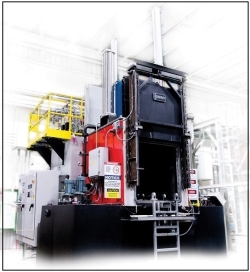
Under the agreement, KJLC will loan three ultra-high purity atomic scale processing tools to the Nanofabrication Laboratory. One 200-millimeter atomic scale processing system integrates both atomic layer deposition and atomic layer etching, enabling researchers to deposit and etch materials with near-atomic precision. Together, the systems are valued at approximately $4.45 million. KJLC will retain ownership and responsibility for maintaining them. Penn State researchers will have access to the three systems for University research, joint projects with KJLC and work conducted for Penn State’s user community.
“From a business perspective, Penn State was the natural choice because of our long-standing relationship and shared commitment to advancing scientific discovery,” said Kurt Lesker IV, president and CEO of Kurt J. Lesker Company. “Through the Materials Research Institute, Penn State brings world-class researchers, advanced nanofabrication capabilities, and a collaborative environment where industry and academia work side by side to solve important challenges. Together, we are creating a center of excellence that will accelerate innovation, develop future talent, and strengthen leadership in semiconductors, advanced packaging and next generation technologies.”
The partnership will also establish workforce development programming for undergraduate and graduate students and early-career professionals, with potential activities including internships and graduate research support.
“KJLC already has considerable training programs in vacuum technologies and deposition,” Robinson said. “By connecting that industry expertise with the research happening at Penn State, we can create new training opportunities for students and the broader workforce.”
Such training opportunities will include learning from Penn State researchers and KJLC engineers, who will use the loaned equipment to develop and test new materials and processing methods for applications including quantum technologies, micro- and nano- scale sensors and mechanical devices, biomedical coatings, advanced packaging and flexible electronics.
“The future of advanced technology will be built one atomic layer at a time,” Lesker said. “By combining Penn State’s research leadership with Kurt J. Lesker Company’s vacuum and thin film expertise in atomic scale processing, we can accelerate the development of new materials and manufacturing processes that enable breakthroughs in semiconductor packaging, quantum technologies, photonics and advanced electronics. Just as importantly, this partnership helps bridge the gap between scientific discovery and real-world application while preparing the next generation of scientists and engineers who will drive innovation for decades to come.”
Penn State and KJLC researchers will use the systems to develop recipes specifying the materials, temperatures, timing and other conditions needed to consistently create a particular thin film or structure. The partners will develop a growing library of standardized atomic-scale processing recipes that can be shared across the research community and ultimately deployed on KJLC platforms worldwide. KJLC will also provide Penn State access to 38 processes it has already developed, and Penn State researchers will be able to draw on KJLC’s principal scientist and other technical experts while developing new ones.
Once a process is developed and refined through the partnership, KJLC could make it available to customers using its equipment elsewhere, extending work done at Penn State to researchers and companies around the world.
For more information: Communications Materials
Image: Andrew Read, Penn State senior vice president for research, right, and Kurt Lesker IV, president and CEO of Kurt J. Lesker Company, left, do a ceremonial ribbon cutting to launch the partnership between Penn State and Kurt J. Lesker Company to develop new ways to create specialized materials for next-generation technologies. Credit: Jennifer M. McCann / Penn State