A new approach to computing has quietly taken shape at Sandia National Laboratories, where researchers have developed a way to store information that could make future electronics more energy efficient.
Electro-thermo-chemical random-access memory, or ETCRAM, works differently from conventional digital memory, which represents information as ones and zeros on silicon wafers. Instead of being limited to two values, ETCRAM can store a range of analog values by using localized heating and electrical pulses to change the properties of materials inside the device.
The team, led by Sandia researchers Elliot Fuller and Alec Talin, demonstrated the approach using tantalum and vanadium oxide materials. The result is a memory technology capable of storing information with far greater precision and dynamic range than existing analog memory technologies. Because the device can hold many distinct analog states rather than simply switching between zero and one, researchers are exploring whether it could perform some computing tasks with less energy.
“The technology that we’ve developed is designed to overcome a limitation of our existing computing technology to really improve energy efficiency,” Fuller said. “ETCRAM is able to achieve 100 times higher precision than existing state-of-the-art technology — and at least three orders of magnitude greater dynamic range. That’s the value of a number that you can store in analog.”
The team started with what researchers already know about the properties of materials used in batteries. But materials that are good at storing energy are not necessarily well suited to storing information. Lithium ions, for example, are useful for energy storage but not ideal for the kind of data storage the Sandia team was pursuing.
“We want to store the maximum amount of information density in a particular volume,” Fuller said. “The challenge with electrochemistry is often how slowly it works. The trick with getting this memory element to work was to have it self-heat. It heats up when the electrochemistry is activated, and that’s what gives us this very large dynamic range and allows it to have very high precision.”
The team is also looking at how the technology could support edge computing, in which information is processed close to where it is collected rather than always being sent to a central processor or remote computing system.
Doing more computation where data are collected could help improve both speed and energy efficiency, particularly as sensors become more common in everyday devices.
For Fuller, Talin, and their colleagues, the work is ultimately about finding new ways for increasingly capable electronics to handle more information without requiring proportionally more energy. ETCRAM is one approach they hope could help bring more of that computing directly to the sensors and devices already woven into everyday life.
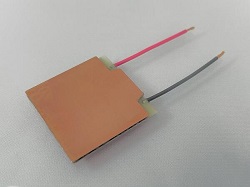
Image – The team responsible for developing ETCRAM is now working to test designs with multiple materials to further improve the technology. Courtesy of: Ruth Frank.
For more information:
Sandia National Laboratories
https://www.sandia.gov/