The U.S. Department of Energy, Washington, reports that an interagency federal research ship recently sailed along the Mid-Atlantic margin to characterize methane hydrate deposits. The researchers collected 2000 km of Multi-Channel Seismic System data that confirmed previously detected methane hydrates, and also discovered new deposits.
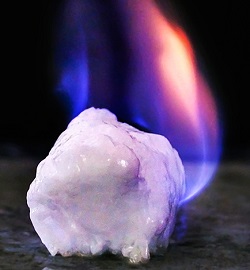
Methane hydrate is a cage-like lattice of ice that contains trapped molecules of methane, the chief constituent of natural gas. If a methane hydrate is warmed or depressurized, it reverts to water and natural gas. When brought to the earth’s surface, one cubic foot of gas hydrate releases up to 180 cubic feet of natural gas, making it a potentially massive new energy source. Hydrate deposits occur under Arctic permafrost and beneath the ocean floor along continental margins.
Researchers acquired six seismic lines running down the continental slope from the shelf-break to waters as deep as about 12,100 feet offshore New Jersey, Delaware, Maryland, Virginia, and North Carolina. The work of the cruise fills a gap in modern seismic data acquisition along the U.S. Atlantic margin and will be used by academic collaborators and other researchers.
“USGS researchers have been involved for decades in investigations that are helping us understand the full extent of the hydrate resource,” says Skip Pratt, NETL Project Manager. “We are pleased that we were able to support a project that is making important advances in understanding gas hydrates.” Federal agencies, along with the private sector and academic institutions, are all working together to gain a better understanding of the nature and distribution of marine gas hydrates.