When not otherwise heat treated, complex engineering castings of ductile iron may be stress relieved at 510 to 675°C (950 to 1250°F). Temperatures at the lower end of this range are satisfactory for many applications; temperatures at the higher end will eliminate virtually all residual stress, but also will effect some reduction in hardness and tensile strength.
Recommended ranges of stress-relieving temperatures for various types of ductile iron are as follows:
Unalloyed: 510 to 565°C (950 to 1050°F)
Low-alloy: 565 to 595°C (1050 to 1100°F)
High-alloy: 595 to 650°C (1100 to 1200°F)
Austenitic: 620 to 675°C (1150 to 1250°F)
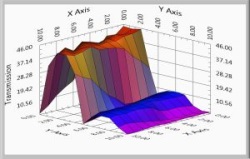
The Figure 25 graph shows the stress relief obtained in ductile iron held at three temperatures for half an hour to eight hours. Initial hardness was 102 to 103 HRB. Hardness after holding at 1000, 1100, and 1200°F for eight hours, was 102 to 104; 101 to 103; and 90 to 93 HRB respectively.
The required time at temperature will depend on the temperature, the complexity of the casting, and the completeness of stress relief needed. However, one hour, plus one hour per inch of section thickness, is the recommended general practice.
Cooling should be uniform to avoid reintroducing stresses. Castings should be furnace-cooled to 290°C (550°F), after which they can be air cooled. In most instances, however, austenitic iron can be uniformly air cooled from the stress-relieving temperature.
Adapted from: K. Hayrynen, Heat Treating and Properties of Ductile Iron, Heat Treating of Irons and Steels, Vol 4D, ASM Handbook, ASM International, 2014, p 508–521. https://doi.org/10.31399/asm.hb.v04d.a0005937
For more information on this topic, visit the article via the link shown below, (subscription required), scroll down the Chapter Contents column on the left, and click on Stress Relieving of Ductile Iron.