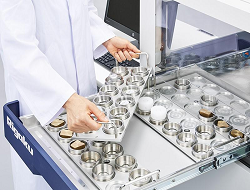
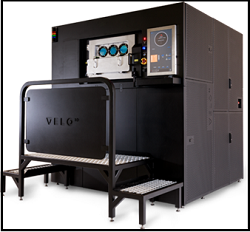
Rigaku, Tokyo, introduces the ZSX Primus IVi tube-below sequential wavelength dispersive X-ray fluorescence spectrometer, which is designed for X-ray analysis of liquids, alloys, and plated metals.
The new spectrometer features a number of improvements from previous systems. The ZSX Primus IVi design offers the smallest footprint available in its class. The efficiency of the new drive sequence reduces time between multiple high-speed precision measurements. The redesigned control systems optimize a series of movement sequences, also resulting in shortened measurement times.
The ZSX Primus IVi system includes a patented vacuum partition system for analyzing liquids. Because the spectroscopic chamber is separated from the sample chamber when changing helium gas, the conversion from vacuum atmosphere to helium atmosphere can be completed in under two minutes. Helium consumption is further reduced compared to models where the spectroscopic chamber must also be fully purged.
The Rigaku optical system is resistant to impact by sample surface height, and enables suppression of X-ray intensity changes caused by variation in distance from the tube. Accuracy of analysis is enhanced by minimizing the effects from differences in fusion molds used in glass bead formulation and the impact of uneven sample surfaces.
Another key advantage is the enhanced ZSX Guidance software, standard for the instrument, which guides the user through automated optimized analysis settings. The software includes a quantitative application auto-configuration features that automatically sets measurement conditions and various corrections based on the user’s own standards. An error prevention function, which can set an access level for each operator, was also added for worry-free operation.