The National Science Foundation (NSF) has awarded grants to eight research teams to support partnerships that will increase diversity in cutting-edge materials research, education, and career development. One of those teams is Penn’s Laboratory for Research on the Structure of Matter (LRSM) and the University of Puerto Rico (UPR), whose long-running collaboration has now received an additional six years of support.
With the goal of supporting partnerships between minority-serving educational institutions and leading materials science research centers, NSF’s Partnership for Research & Education in Materials (PREM) program funds innovative research programs and provides institutional support to increase recruitment, retention, and graduation by underrepresented groups as well as providing underserved communities access to materials research and education.
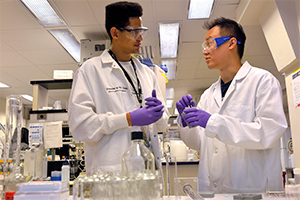
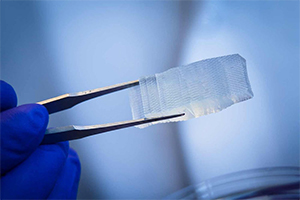
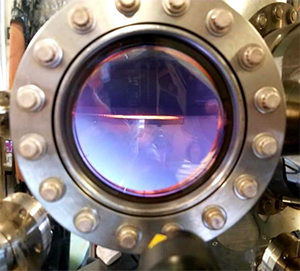
With this PREM award, known as the Advancing Device Innovation through Inclusive Research and Education (ADIIR) program, researchers from Penn and UPR’s Humacao and Cayey campuses will conduct research on the properties of novel carbon-based materials with unique properties and will study the effects of surface modification in new classes of sensors, detectors, and purification devices.
Thanks to this collaboration of more than 20 years, both institutions have made significant scientific and educational progress aided by biannual symposia and regular pre-pandemic travel between both institutions before the pandemic, resulting in a rich portfolio of publications, conference presentations, patents, students trained, and outreach programs.
Another focus of PREM is to increase participation in STEM careers by minorities and women. “A focus on the diversity of students, faculty, and partners, paired with the revitalization of under-resourced research, is the foundation of PREM and has been the source of many successful outcomes,” says Debasis Majumdar, director of the PREM program. “It expands national innovation capacity and a much needed, highly trained, and diverse workforce, propelling U.S. leadership in STEM fields.”
Using PREM’s “pathways” approach, the Penn and UPR partnership will engage Hispanic, women, and Afro-Latin students from disadvantaged backgrounds, including low-income students, first-generation college students, and those living in rural areas, with materials science and engineering research and education. This includes coordinating outreach activities with K-12 schools, communities, and undergraduate institutions in Puerto Rico and providing mentorship and research opportunities through summer programs, including the LRSM’s Research Experience for Undergraduates (REU) program.
Penn and UPR researchers are excited for what the next six years of PREM will bring and are looking forward to the return of travel, lab visits, and in-person events once pandemic restrictions are lifted.
For more information: University of Pennsylvania School of Engineering & Applied Science