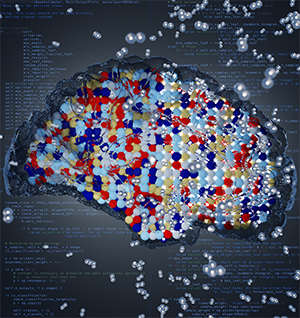
A group of materials and computer scientists from Sandia National Laboratories collaborated with a few international researchers to create 12 new alloys over the course of more than a year. The study shows how machine learning can help expedite the future of hydrogen energy by enabling the simple creation of hydrogen infrastructure for consumers.
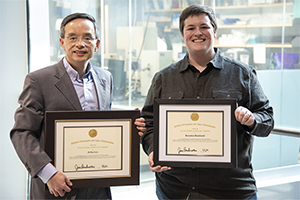
Mark Allendorf, Vitalie Stavila, Sapan Agarwal, and Matthew Witman are part of the Sandia team that authored a paper describing the new approach together with scientists from Ångström Laboratory in Sweden and Nottingham University in the United Kingdom. A data-powered modeling capability of estimating thermodynamic properties can quickly increase the research speed.
When such machine learning models are constructed and trained, they take only seconds to execute and can thus quickly screen new chemical spaces: in this study, 600 materials that exhibit the potential for hydrogen storage and transmission.
The researchers also discovered something else in their study — outcomes that have drastic implications for small-scale hydrogen generation at hydrogen fuel-cell filling stations.
The researchers have been continuously refining the model. However, as the database is already public through the Department of Energy, once better insights into the method are achieved, the use of machine learning could power major advancements in various fields, such as materials science, noted Agarwal.
This study was funded by the Hydrogen and Fuel Cell Technologies Office within the U.S. Department of Energy, Office of Energy Efficiency and Renewable Energy, and through Sandia’s Laboratory Directed Research and Development program.
For more information: Sandia National Laboratories