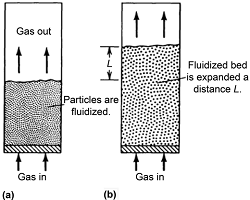
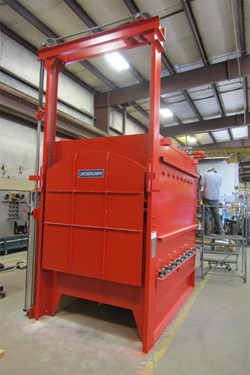
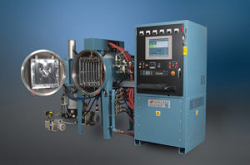
A fluid bed results when a gas is passed upward through a bed of small solid particles at a rate fast enough to lift these particles and to create turbulence. This motion of particles, which are usually made of aluminum oxide or silica oxide, is similar to that of a fluid.
When gas is forced upward through small holes in a supporting plate, two forces meet to raise the particles: the buoyancy of the gas and the retarding force known as aerodynamic drag. Objects to be heat treated are immersed directly into the bed of particles. Fluidized beds have been designed to perform a wide variety of heat treating tasks including stress relieving, preheating, hardening, quenching, annealing, and tempering, as well as a variety of surface treatments such as carburizing, nitriding, and steam tempering.
However, despite their numerous advantages, these furnace types were not really accepted in the market. In the early 1980s, this furnace technology seemed to be on the right track as an alternative to salt bath technology, showing similar advantages and applications but without the environmental hazard of salt compounds, waste disposal, recycling of salts, and so on. Nowadays it can be concluded that salt bath technology was partially substituted by vacuum technology, but especially for bainitic hardening (austempering processes), salt baths are still commonly used and show a slightly growing tendency, whereas fluidized beds are hardly used any more.
For more information, click on the link below (subscription required). Then scroll to Figure 7.
R. Schneider ; R. Mesquita ; H. Altena ; T. Müller ; P. Seemann,Processes and Furnace Equipment for Heat Treating of Tool Steels, ASM International, 2014, https://doi.org/10.31399/asm.hb.v04d.a0005958