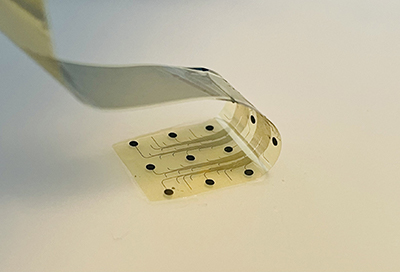
INBRAIN Neuroelectronics, a company specializing in graphene-based neural technologies, announced the world’s first human procedure using its cortical interface during a brain tumor resection, successfully distinguishing between healthy and cancerous tissue with micrometer precision. This milestone showcases the potential of graphene-based BCI technology not only in decoding brain signals but also as a precise surgical tool for cancer and other neurotechnological applications. The study, sponsored by the University of Manchester and primarily funded by the European Commission’s Graphene Flagship project, marks a significant advancement in the field.
“The world’s first human application of a graphene-based BCI highlights the transformative impact of graphene-based neural technologies in medicine. This clinical milestone opens a new era for BCI technology, paving the way for advancements in both neural decoding and its application as a therapeutic intervention,” said Carolina Aguilar, CEO and Co-Founder of INBRAIN Neuroelectronics.
INBRAIN’s BCI platform leverages the exceptional properties of graphene, a material made of a single layer of carbon atoms. Despite being the thinnest known material to science, graphene is stronger than steel and possesses a unique combination of electronic and mechanical properties that make it ideal for neurotechnology innovation.
“We are capturing brain activity in areas where traditional metals and materials struggle with signal fidelity. Graphene provides ultra-high density for sensing and stimulating, which is critical to conduct high precision resections while preserving the patient’s functional capacities, such as movement, language or cognition,” said Dr. David Coope, the neurosurgeon who performed the procedure.
“After extensive engineering development and pre-clinical trials, INBRAIN’s first-in-human study will involve 8-10 patients, primarily to demonstrate the safety of graphene in direct contact with the human brain,” said Kostas Kostarelos, Ph.D., Co-Founder, INBRAIN Neuroelectronics. “The study will also aim to demonstrate graphene’s superiority over other materials in decoding brain functionality in both awake and asleep states.”
“The integration of graphene and AI with advanced semiconductor technology has allowed INBRAIN to pioneer a new generation of minimally-invasive BCI therapeutics designed for the personalized treatment of neurological disorders,” said Jose A. Garrido, Ph.D., Co-Founder and Chief Scientific Officer of INBRAIN and ICREA Professor at the Catalan Institute of Nanoscience and Nanotechnology.
The study is powered by INBRAIN’s graphene-based Intelligent Network Decoding & Modulation (BCI-Tx) Platform, which has received Breakthrough Device Designation for Parkinson’s disease from the U.S. Food & Drug Administration. INBRAIN’s BCI-Tx platform leverages graphene’s unique properties to deliver ultra-high signal resolution and adaptive neuroelectronic therapy, enabling real-time decoding of biomarkers and precise modulation of cortical and subcortical structures at the micrometer scale for neural network rebalancing.
For more information: INBRAIN Neuroelectronics