Picosun Oy, Finland, reports that it has developed atomic layer deposition (ALD) equipment specifically designed for large-area flexible electronics encapsulation. Manufacturing electronic components on flexible plastic substrates enables lightweight, bendable, and lower-cost products.
Flexible displays, wearable electronics, and “smart” clothes are some of the most common examples. More specific applications can be found in medical and security industries, where advanced X‐ray detectors are being developed utilizing organic electronic components printed on plastic foils.
Organic electronic devices have the potential to enable a whole new generation of products, but one of the main drawbacks is sensitivity to moisture and airborne impurities. Ultrathin ALD nanolaminates provide an ideal solution. Flexible, invisible, and practically weightless ALD films form dense and pinhole‐free encapsulation over the surface, down to the smallest nanoscale details.
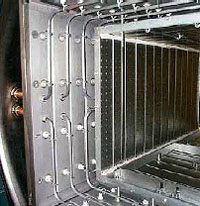
In Picosun’s new large-area ALD tools, especially developed for the needs of the printed electronics industries, high-quality ALD films can be manufactured cost-efficiently on large plastic sheets and at temperatures low enough for sensitive organic materials.
“We have again put our extensive expertise in ALD system design to work to realize completely novel technology for the vast market of printed electronics,” says Mr. Timo Malinen, Chief Operating Officer of Picosun. “Our new, large-area batch ALD systems are developed and optimized in collaboration with these industries. Their disruptive design enables cost-efficient encapsulation of large sheets of organic electronic components, producing sustainable, long-lived end products for consumers as well as industries.”