Additive manufacturing (AM), a burgeoning technology for alloy fabrication, allows engineers to specifically manufacture a complex component in any shape. However, due to the unique processing involved, the alloy behaves differently during fabrication using AM when compared with other traditional manufacturing techniques.
The alloy components produced by AM can easily develop a texture that makes them behave like wood in some ways—stronger along the grain than against it—and thus limits the strength and ductility. There is a well-known trade-off between strength and ductility, which cannot be fully solved using current AM techniques, like reducing the grain size through externally applied deformation.
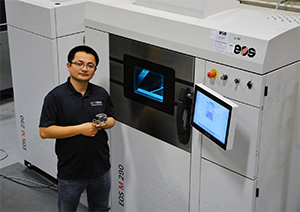
Wei Xiong, assistant professor of mechanical engineering and materials science at the University of Pittsburgh Swanson School of Engineering, will study the fundamental mechanisms behind this trade-off in a new project that received a $526,334 Faculty Early Career Development (CAREER) Award from the National Science Foundation (NSF). The five-year project, titled “Unraveling Fundamental Mechanisms Governing Grain Refinement in Complex Concentrated Alloys Made by Additive Manufacturing Towards Strong and Ductile Structures,” began on April 15, 2021.
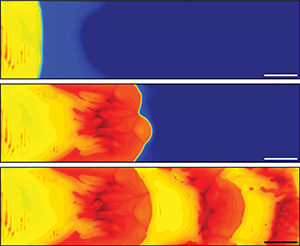
Grain refinement is a method used to augment a material by changing the size of its grain structure, improving both its strength and ductility. Xiong’s project aims to understand the underlying mechanism of grain refinements in complex concentrated alloys made by additive manufacturing of combinations of multiple chemical element additions.
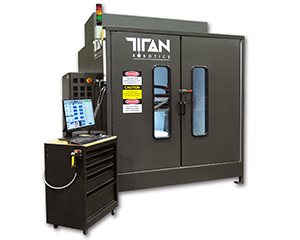
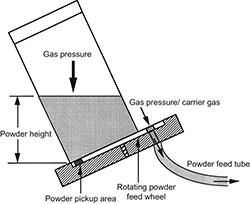
Xiong’s Physical Metallurgy and Materials Design Lab will investigate whether increasing entropy or disorder, in an alloy system, will slow grain coarsening and stabilize microstructures, making the material both strong and ductile. Particularly, they will focus on mixing alloy powders to print complex concentrated alloys, which is a new type of material that usually stabilizes the microstructure due to its resulting high entropy.
According to the NSF, the Faculty Early Career Development (CAREER) Program is its most prestigious award in support of early-career faculty who have the potential to serve as academic role models in research and education and to lead advances in the mission of their department or organization. This award marks the fourth consecutive year that a faculty member in the Department of Mechanical Engineering and Materials Science has received a CAREER Award.
For more information: University of Pittsburgh-Swanson School of Engineering