A new generation of luminescent materials has the potential to cool cities by re-emitting light that would otherwise be converted into heat. They might also cut down on energy use, since luminescent sidewalks, glowing road markers, or even glowing buildings could replace some street lighting.
Such photoluminescent materials work by “trapping” the energy of a photon and then re-emitting that energy as lower-wavelength light. Sometimes the light is emitted immediately, such as in a fluorescent light bulb. Other materials, which are called persistently luminescent, store the energy longer and emit it more slowly.
These materials that glow strongly for hours open possibilities, such as “glow-in-the-dark” cities lighted by luminescent pavements and buildings. Since 19 percent of all global energy use is for lighting, and in Europe about 1.6 percent specifically for street lighting, the potential energy savings are large, write building engineer Anna Laura Pisello and colleagues in the 2021 Annual Review of Materials Research.
One problem with the approach is that most luminescent material won’t glow all the way through the night. Better materials could help solve that problem, says Pisello, of the University of Perugia, who studies energy-efficient building materials. In the meantime, existing materials could be combined with electric lighting that would come on long enough to recharge the road markings before switching off again.
Luminescent paint could also provide outdoor area lighting. Pisello’s lab developed such a glow-in-the-dark paint and in a 2019 report, simulated what would happen if they painted a public path near a railway station with it. By glowing throughout the night, the paint would reduce energy needed for lighting by about 27 percent in the immediate area, the scientists found.
Luminescent materials would likely only replace existing lighting, not add to it
Luminescent materials could also help fight what is known as the urban heat island effect. One increasingly common solution is to use “cool” materials that reflect light, such as white paint and light-colored asphalt. It turns out that adding luminescent materials can help even more.
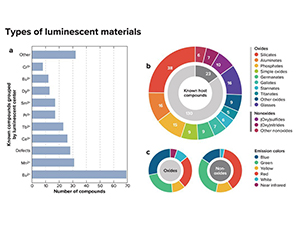
There are 250 known luminescent materials, many of them not yet studied for practical applications. Pisello says there is a potential for glowing paints and pavements that last longer and shine brighter in more colors.
For more information: Smithsonian Magazine