Researchers at Monash University, Melbourne, Australia, have developed a cost-effective way of making flexible copper conductors for commercial applications. Previous success in the field of ultra-lightweight “aerogel monoliths” has largely relied on the use of gold and silver nanowires. The copper aerogel monoliths are conductive and could be further embedded into polymeric elastomers – extremely flexible, stretchable materials – to obtain conducting rubbers.
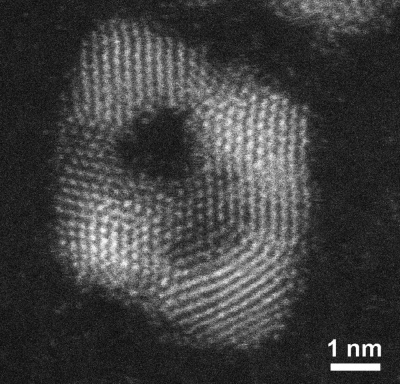
“Aerogel monoliths are like kitchen sponges, but ours are made of ultra fine copper nanowires, using a fabrication process called freeze drying,” said lead researcher Associate Professor Wenlong Cheng, from Monash University’s Department of Chemical Engineering.
Despite copper’s conductivity, its potential has been largely unexplored because of its tendency to oxidize and the poor mechanical stability of copper nanowire aerogel monoliths. However, the researchers found that adding a trace amount of poly(vinyl alcohol) (PVA) to the aerogels substantially improves mechanical strength and robustness without impairing conductivity.
What’s more, once the PVA is included, the aerogels could be used to make electrically conductive rubber materials without the need for any prewiring. Reshaping is also easy.
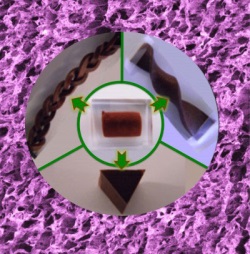
“The conducting rubbers could be shaped in arbitrary 1D, 2D, and 3D shapes simply by cutting, while maintaining the conductivities,” says Prof. Cheng.
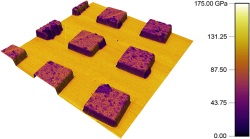
The versatility extends to the degree of conductivity. Conductivity can be tuned simply by adjusting the loading of copper nanowires. A low loading of nanowires would be appropriate for a pressure sensor, whereas a high loading would be suitable for a stretchable conductor.
Affordable versions of these materials open up the potential for use in a range of new-generation concepts: from prosthetic skin to electronic paper, for implantable medical devices, and for flexible displays and touch screens.
They can be used in rubber-like electronic devices that, unlike paper-like electronic devices, can stretch as well as bend. They can also be attached to topologically complex curved surfaces, serving as real skin-like sensing devices.