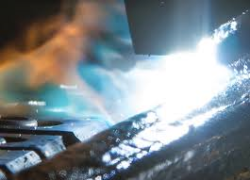
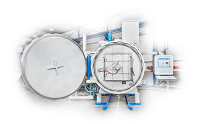
Norsk Titanium AS (NTi), Norway, demonstrated its fourth-generation Rapid Plasma Deposition (RPD) machine by producing a unique structural titanium spar for one of the world’s largest commercial aircraft manufacturers at its Technology Centre in Oslo. The RPD machine uses plasma to melt titanium wire in an inert argon atmosphere to precisely and rapidly build up layers to a near-net-shape that requires very little finish machining. The aircraft part was produced in a fraction of the time and cost of the forging process being replaced by RPD technology.
Since 2007, NTi has been working to develop and commercialize additively manufactured, aerospace-grade titanium components to generate unprecedented savings in time and cost over legacy forging and machining operations. The company’s full rate production machines are the result of nine years of research and each can produce 22 metric tons of aerospace-grade titanium parts per year. In 2016, NTi will break ground in the United States on the world’s first industrial-scale additive manufacturing facility for aerospace production.
Norsk hosted a titanium additive manufacturing summit on December 1 at its Technology Center for aerospace participants of the European Space Agency’s (ESA) €20 million AMAZE initiative. Additive Manufacturing Aiming Towards Zero Waste & Efficient Production of High-Tech Metal Products (AMAZE), is Europe’s largest working team on the subject of metal additive manufacturing. NTi owns and operates the only wire-based additive manufacturing factory in ESA’s cooperative program,
“Norsk Technology is pleased to host our AMAZE partners and provide the first-ever insider’s look into the production phase of our RPD technology,” said NTi Chief Executive Officer Warren M. Boley, Jr. “We are revolutionizing the metal manufacturing industry with radically less expensive aerospace-grade titanium components, and our participation in AMAZE allows collaboration with European manufacturers and early access to our technology.”
The overarching goal of AMAZE is to rapidly produce large defect-free, additively-manufactured components, ideally with close to zero waste, for use in the European high-tech industries, such as aeronautics, space, nuclear fusion, automotive, and tooling. The project, launched in 2013 by David Jarvis of the ESA, is supported by nine European countries and 28 active partners, including 19 industrial companies, eight universities and one intergovernmental agency.