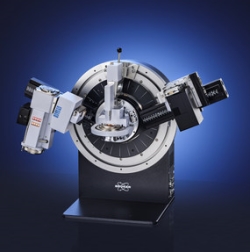
The National institute for Scientific Research (INRS), Canada, reports that protons accelerated by irradiation of a solid target by an ultra-intense short-pulse laser, can be used for stress testing materials in harsh conditions such as nuclear power plants.
Researchers showed that these laser-generated protons can produce, in a very short time scale, a strong mechanical and thermal damage, which, given the short irradiation time, does not allow for recovery of the material. We confirm this by analyzing changes in the mechanical, optical, electrical, and morphological properties of five materials of interest to be used in harsh conditions.
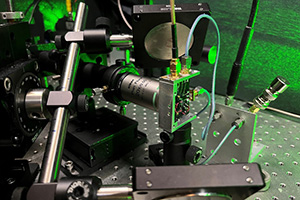
In their Nature article, they provide experimental evidence that laser-generated protons can be used to perform and analyze stress tests on different materials. Compared to the existing methods, this laser-driven analysis has the advantage of being much faster, since it can be performed with a few single laser shots, and of being more compact, since it can be performed using a table-top high-power laser. We confirm this by testing the morphological, mechanical, electrical, and optical response of five materials.
Stress testing occurs in several domains and industrial applications. In the present manuscript, they concentrate more on high-melting-point materials typically employed in ICF-MCF facilities (and in particular as PFM), since there is a strong demand to improve materials on these facilities and hence there have been extensive studies related to them. As such, they focus in this study particularly on tungsten, a material currently used for typical ICF facilities or reactors, on carbon (graphite), the material currently used for divertors, secondary walls and junctions, and on three materials (titanium, tantalum, and molybdenum) suggested by literature as good candidates for realizing nano- or W-based composite structures, since having a melting point higher than the maximum working temperature required by PFM safety regulations. The researchers demonstrate that a laser-generated proton beam allows reproducing an equivalent damage to the material, as obtained normally only after several months of full operation of facilities, producing a harsh environment for materials (e.g., ICF facilities or nuclear reactors). This equivalent damage to the material is a result of the fact that the short and intense proton irradiation does not allow for recovery of the material.