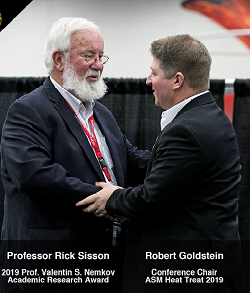
Engineers from Seco Vacuum Technologies and the Herring Group reviewed and compared nitriding methods, their history and processing options, at the ASM International Heat Treat 2019 conference in Detroit.
A critical question is, “Why has the nitriding field grown so rapidly in recent years?” The answer is complex, but this paper considers the question by looking at two factors: tribological properties of nitrided layers, and advances in equipment and processes that have improved reliability, repeatability and flexibility.
Nitriding has a rich history spanning over 100 years. It is the nitrided surface itself that is largely responsible for increased interest. The surface engineering that is possible along with its predictable and relatively distortion-free results are huge factors in its growth.
Two nitriding technologies have become dominant in recent years: gas and ion. Gas nitriding has grown from simple atmosphere furnaces using single or two-stage processes, to advanced vacuum-purged equipment that can accurately predict and control nitriding potential.
Ion (plasma) nitriding has progressed from plasma heating in cold wall vacuum furnaces, to the use of hot wall technologies and pulsed plasma. Both processes and their advances were discussed, as each offers engineers choices that result in properly nitrided parts capable of meeting the most stringent requirements.
Title: Nitriding – Its Growth and Tribological Benefits for Surface Engineering
Authors: Mark Hemsath, Seco Vacuum Technologies LLC, Meadville, Pennsylvania
Prof. Daniel H. Herring, The Herring Group Inc., Elmhurst, Illinois