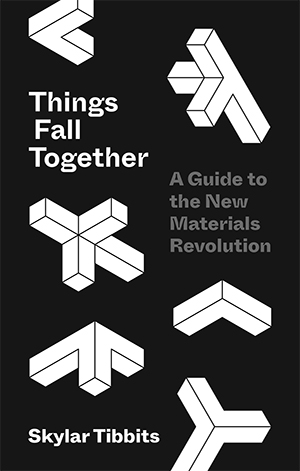
When we picture what materials, design, and manufacturing of the future will look like, it’s easy to imagine digitally enabled smart homes filled with data-mining furniture, assembled by sophisticated robots, and upholstered in biometric synthetic fabrics. But a new book by Skylar Tibbits, a designer and director of MIT’s Self-Assembly Lab, suggests ongoing developments in materials science are poised to make our world a lot less digital—and much more wondrous. Things Fall Together: A Guide to the New Materials Revolution, forthcoming from Princeton University Press, envisions a not-so-far-off future where flat-packed furniture springs to shape when unboxed, buildings adapt their design to become more efficient over time, shoes and stents mold themselves to the contours of our bodies, and roads built with self-healing concrete repair potholes on their own. It’s a world where materials inspire novel forms and enable entirely new ways of living.
Tibbits proposes a radical shift away from thinking of materials as the passive substances that we humans bend and build into the stuff around us. Instead, he aims to show how they can function as active agents—even collaborators—in the design and manufacturing process. By developing products and structures around materials’ specific properties (such as stiffness, conductivity, or the ability to expand or contract), and ‘programming’ them by factoring in interactions with properties like heat and moisture or the forces of physics, we can activate their full potential to grow, transform, and improve themselves. Tibbits makes the case for a materials-driven approach where form and function are symbiotic, the medium (and not the maker) guides the final design, manufacturing is decentralized, and nothing is intended to serve a single and permanent purpose. This, he contends, is the way to create smarter, simpler, and more sustainable solutions to our most complex problems, from coastal erosion, to waste reduction.
The material future Tibbits presents is a tantalizing one, but he acknowledges that the advancement and adoption of new materials innovation will require a fundamental philosophical shift in the process of design itself. Such ruptures in the way we think about aesthetics, authorship, business, and manufacturing seem impossible to enact, even as we reckon with our industries’ contributions to waste, consumerism, and labor inequities.
For more information: Princeton University Press