Engineers from Bodycote, Germany and England, will discuss the influence of machining on the surface hardness and corrosion resistance of austenitic stainless steels at Heat Treat 2019. The main goal of low-temperature surface hardening of austenitic stainless steels is a significant increase in surface hardness, while at the same time maintaining superior corrosion resistance. The treatment temperature has to be low enough to achieve a precipitation-free diffusion zone, yet high enough to allow sufficient diffusion depths needed for technical applications.
The results are often influenced by the machining of parts prior to surface treatment. Best results are usually achieved on solution annealed and electro-polished surfaces, but customer needs for certain manufacturing routes, strength considerations, and overall production costs often do not allow for such additional processes.
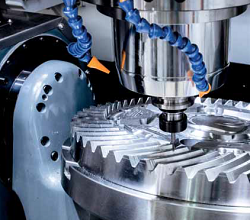
This paper gives a basic overview on machinability of austenitic stainless steels and how different machining operations such as turning, cold forming, grinding, and additive manufacturing influence the result of low-temperature surface hardening. Possible machining process optimizations for the different machining operations will be presented in order to increase diffusion depth, surface hardness, reproducibility, and corrosion resistance without altering the hardening process parameters.
Title: “Influence of Machining on Low Temperature Surface Hardening of Stainless Steel.”
Authors:
Mr. Ulli Oberste-Lehn , Bodycote, Duesseldorf, Germany
Dr. Andreas Karl , Bodycote, Landsberg, Germany
Mr. Chad Beamer , Bodycote, London, Ohio
Wednesday, October 16, 2019: 8:30 AM, 251A (TCF Center), Detroit