A team of scientists at Nagoya City University (NCU), Japan, in collaboration with the Japan Atomic Energy Agency and Kyoto University, have found an energy-efficient strategy to enrich silicon surfaces using a dilute deuterium solution.
Most hydrogen atoms on Earth contain only one proton and one electron, but there exist hydrogen isotopes which also have one neutron (deuterium) or two neutrons (tritium). Deuterium, which essentially weighs twice as much as ‘normal’ hydrogen, can be used to label and track molecules such as proteins to investigate biochemical processes, in drugs to reduce their metabolic rate and increase their half-life in the body, and to passivate surfaces of silicon-based semiconductors.
Hydrogen passivation ensures silicon atoms don’t desorb, increasing the durability of microchips, batteries, and solar cells. However, through mechanisms that are still not completely understood, passivation with deuterium instead of hydrogen results in desorption probabilities about one hundred times lower, implying that deuterium may soon become an indispensable ingredient in electronic devices.
Unfortunately, both the procurement of deuterium and available techniques to enrich silicon surfaces with it are very energy inefficient or require very expensive deuterium gas.
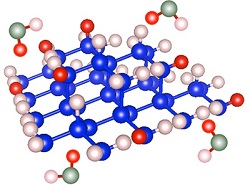
In a study published in Physical Review Materials, the NCU researchers found a peculiar exchange reaction from hydrogen to deuterium can occur on the surface of nanocrystalline silicon (n-Si). They demonstrated this reaction in thin n-Si films submerged in a deuterium-containing solution using inelastic neutron scattering. This spectroscopy technique involves irradiating neutrons onto a sample and analyzing the resulting atomic motions or crystal vibrations.
These experiments, coupled with other spectroscopy methods and energy calculations based on quantum mechanics, revealed the underlying mechanisms that favor the replacement of hydrogen terminations on the surface of n-Si with deuterium: The exchange process is related to differences in the surface vibrational modes between hydrogen- and deuterium-terminated n-Si.
“We achieved a fourfold increase in the concentration of surface deuterium atoms on n-Si in our experiments performed in the liquid phase,” said Takahiro Matsumoto, the study leader. “We also proposed a gas-phase enrichment protocol for n-Si that, according to our theoretical calculations, could enhance the rate of deuterium enrichment 15-fold.”
This innovative strategy of exploiting quantum effects on the surface of n-Si could pave the way to new methods to procure and utilize deuterium. “The efficient hydrogen-to-deuterium exchange reaction we reported may lead to sustainable, economically feasible, and environment-friendly deuterium enrichment protocols, leading to more durable semiconductor technology,” concludes Dr. Matsumoto.
The NCU team also said “It has been theoretically predicted that the heavier the hydrogen is, the higher the efficiency of the exchange reaction is. Thus, we can expect more efficient enrichment of tritium atoms on n-Si, which leads to the possibility of purifying tritium contaminated water. We believe that this is an issue that must be urgently solved.”
Image – Schematic illustration of the hydrogen-to-deuterium exchange reactions at a hydrogen-terminated n-Si surface in the presence of HDO molecules (Deuterium: red spheres, Hydrogen: pink spheres, Oxygen: green spheres, Silicon: blue spheres). Courtesy of: Takahiro Matsumoto, Nagoya City University.
For more information:
Nagoya City University
https://www.nagoya-cu.ac.jp/english/