The discovery of graphene created great interest in two-dimensional (2D) materials, but it is tricky to synthesize 2D materials comprised solely of metals. The synthesis of monolayer gold has so far been limited to free-standing several-atoms-thick layers, or monolayers confined on or inside templates.
Gold nanoparticles are of interest due to their application in electronics, catalysis, photonics, sensing and biomedicine.
For the first time, scientists from Linköping University in Sweden have successfully developed gold sheets that are only a single atom layer thick. Dubbed “goldene,” this groundbreaking material exhibits new properties that could transform several technological applications, from environmental catalysis to advanced electronics.
The creation of goldene marks a significant achievement in materials science. Typically, gold atoms naturally tend to clump together, making the formation of such thin layers challenging. Inspired by ancient techniques, the researchers applied a centuries-old Japanese method, refining it to suit modern scientific requirements.
In the process, the scientists have completely revamped some of the properties of gold. For instance, gold is a great electrical conductor, which is used in a lot of electronic hardware. Your phone and computer have gold in it for this exact reason.
But when reduced to a single sheet only one atom thick, gold (or goldene) becomes a semiconductor. Just as graphene exhibits extraordinary properties at a single-layer thickness, so does this 2D material.
“Since the discovery of graphene, 2D materials have gained interest for their extraordinary properties. Diverse 2D materials comprising non-metallic elements or covalently bonded blends have been investigated. However, the synthesis of 2D materials solely comprising metals is challenging,” said the researchers.
“Goldene is one of few elemental 2D materials comprising metals, which are produced via scalable methods. Metals, especially noble metals such as gold due to their plasmonic properties, are used in a wide range of applications such as chemical, biological, pharmaceutical, and electrical applications. Thus, goldene would find unique applications different from those of other 2D materials,” they added.
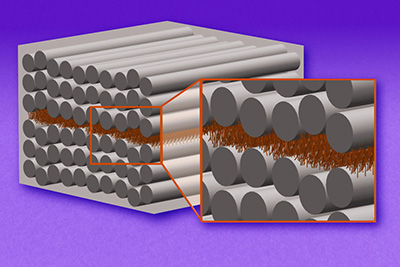
The journey to goldene began unexpectedly and had many twists and turns. The researchers were working with a special conductive ceramic called titanium silicon carbide in which silicon is embedded in very thin layers. They added some gold to the bulk material at high temperature to make it more conductive. But, to everyone’s surprise, they observed that atomic layers of gold replaced silicon within the ceramic matrix, leading to the formation of titanium gold carbide — a precursor to goldene.
This process was painstaking. It involved tweaking different concentrations of Murakami’s reagent (an alkaline potassium ferricyanide solution) over different periods. Still, even this wasn’t enough. After much trial and error, the researchers found a sweet spot for the reagent’s dilution. But they also found the secret sauce: performing the etching under complete darkness. Light triggers the formation of cyanide ions from the reagent, which attack the gold. Finally, the researchers added surfactants to preserve the resulting golden sheets from curling and coalescence.
Potassium ferricyanide can be toxic, which is why it must be handled with extreme care. However, the researchers note that their method involves diluting this reagent to less than one percent in the solution, minimizing its impact. Moreover, the cyanide ions remain confined in the reagent’s molecules and not released.
Using an electron microscope, the researchers confirmed goldene’s unique structure, characterized by having two free bonds in its two-dimensional form, thus enhancing its chemical reactivity. This makes it ideal as a catalyst for applications in carbon dioxide conversion, hydrogen production, and the creation of value-added chemicals.
Beyond the lab, the implications of goldene are vast. The material’s efficiency in catalytic applications means that less gold is needed for processes that currently depend on larger quantities of the metal. Goldene also exhibits semiconductor properties, unlike its bulk form. So, it opens up new uses for gold in technologies where traditional metals are not feasible.
For more information: Nature Synthesis