A team of scientists, led by physicist Peng Wei at the University of California, Riverside, has developed a new superconductor material with potential applications in quantum computing. This material could be a candidate for a “topological superconductor,” which uses a delocalized state of an electron or hole to robustly carry quantum information and process data.
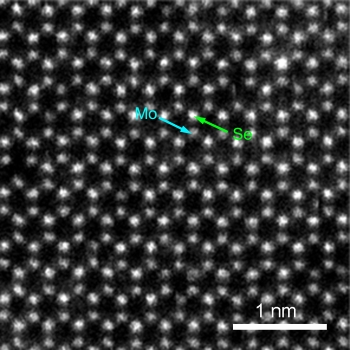
The researchers combined trigonal tellurium, a chiral and non-magnetic material, with a surface-state superconductor on a thin film of gold. They observed quantum states at the interface with well-defined spin polarization, which could be used to create spin quantum bits (qubits). This breakthrough could significantly advance the field of quantum computing.
“By creating a very clean interface between the chiral material and gold, we developed a two-dimensional interface superconductor,” said Wei, an associate professor of physics and astronomy. “The interface superconductor is unique as it lives in an environment where the energy of the spin is six times more enhanced than those in conventional superconductors.”
The researchers observed that the interface superconductor undergoes a transition under a magnetic field and becomes more robust at a high field compared with the low field, which suggests a transition into a “triplet superconductor,” which is more stable under a magnetic field.
Furthermore, through collaboration with scientists at the National Institute of Standards and Technology, the researchers showed that such a superconductor involving heterostructure gold and niobium thin films naturally suppresses decoherence sources from material defects such as niobium oxides that are a common challenge for niobium superconductors. They showed that the superconductor can be made into high-quality low-loss microwave resonators with a quality factor reaching 1 million.
According to the multinational technology company IBM, the new technology has applications in quantum computing, a field that uses quantum mechanics to solve complex problems that classical computers or supercomputers cannot solve or cannot solve quickly enough.
“We achieved this using materials that are one order of magnitude thinner than those typically used in the quantum computing industry,” Wei said. “The low-loss microwave resonators are critical components of quantum computing and could lead to low-loss superconducting qubits. The biggest challenge in quantum computing is to reduce decoherence or quantum information loss in a qubit system.”
Decoherence occurs when a quantum system interacts with its environment, causing the system’s information to get mixed up with the environment. Decoherence poses a challenge for realizing quantum computers.
Unlike previous methods that require magnetic materials, the researchers’ new approach uses non-magnetic materials for a cleaner interface.
“Our material could be a promising candidate for developing more scalable and reliable quantum computing components,” Wei said.
For more information: Science Advances
Image: Peng Wei