
TESCAN Group, a.s, Czech Republic, a leading global manufacturer of electron microscopes and advanced scientific instruments, has acquired EXpressLO LLC, Lehigh Acres, Fla., a provider of innovative FIB lift-out solutions for specimen preparation in STEM and other analytical techniques.
Continue readingFailure and collapse of the Arecibo Observatory telescope assessed by new report
A new report from the National Academies of Sciences, Engineering, and Medicine, Washington, D.C., analyzes the causes of the 2020 collapse of the National Science Foundation’s telescope at the Arecibo Observatory in Puerto Rico, where NSF maintained research operations for its National Astronomy and Ionosphere Center, and draws lessons learned for other unique, critical science facilities.
Continue readingThermo Fisher highlights use of advanced SEM for metal quality control analysis
Thermo Fisher Scientific, Waltham, Mass., has highlighted the ability of scanning electron microscopy to successfully capture defects when conducting failure analysis on metals.
Continue readingAirbus and Plastometrex partner on standardization of PIP
In a significant move to streamline mechanical testing and enhance material insights, Airbus, France, the global aerospace leader, is collaborating with Plastometrex, England, to support the standardization of profilometry-based indentation plastometry (PIP) – the innovative mechanical testing technique developed and commercialized by the Cambridge-based technology provider.
Continue readingRelease of the Xtrology fully automated thin film inspection system
HORIBA STEC, Co., Ltd., Japan, released the fully automated thin film inspection system, Xtrology, that combines spectroscopic ellipsometry, Raman spectroscopy, and photoluminescence sensors making it possible to perform important inspections, such as film thickness measurement, defect analysis, and composition analysis of various wafers with a single instrument.
Continue readingScientists gain insight into the material defects that cause errors in quantum computing
A team of researchers at Ames National Laboratory, Ames, Iowa, has made significant progress in understanding how surface oxides, a primary cause of decoherence in quantum circuits, can improve the performance of quantum computing circuits.
Continue readingSwRI evaluates reliability of pressure relief valves for liquid natural gas tanks in train derailment scenarios
Southwest Research Institute, San Antonio, Texas, has helped determine the viability of pressure relief valves for liquid natural gas tanks in the event of a train derailment for the Federal Rail Administration.
Continue readingNikon’s large-envelope X-ray CT system installed in Hyundai Motor North America’s new Safety Test and Investigation Laboratory
Nikon Metrology, Inc., Japan, and Hyundai Motor North America, Fountain Valley, Calif., announced that Hyundai has purchased and installed Nikon’s X-ray computed tomography system in its newly opened $51.4 million Safety Test and Investigation Laboratory in Superior Township, Mich.
Continue readinginTEST Corporation launches innovative hover sense non-contact probe testing technology for electric vehicle battery testing
inTEST Corporation, Mt. Laurel, N. J., launched the Acculogic patent-pending hover sense non-contact technology for electric vehicle battery testing, representing a significant leap forward in validating the quality and reliability of EV battery interconnects.
Continue readingThermo Fisher Scientific announces a new in-line metrology solution to improve battery safety and performance
To address the needs of the rapidly growing battery market, Thermo Fisher Scientific, Waltham, Mass., introduced the Thermo Scientific LInspector Edge In-line Mass Profilometer, which delivers full-width electrode mass loading measurement and provides battery manufacturers with the data needed to make better, safer batteries, more efficiently.
Continue readingORNL researchers enhance reliability of electric vehicle charging
Researchers at the Department of Energy’s Oak Ridge National Laboratory, Oak Ridge, Tenn., are developing algorithms and multilayered communication and control systems that make electric vehicle chargers operate more reliably, even if there is a voltage drop or disturbance in the electric grid.
Continue readingHenkel semiconductor capillary underfill enables complex AI and HPC large body advanced packaging designs
Henkel, Germany, released a semiconductor capillary underfill encapsulant to address the unique requirements of the market’s most demanding advanced packages, like those used in artificial intelligence (AI) and high-performance computing (HPC) applications.
Continue readingHexagon’s industry-first zoom-enabled optical 3D scanner
Hexagon’s Manufacturing Intelligence division, Sweden, launched the first optical 3D scanner on the market with a motorized zoom lens that enables users to adjust data resolution and measurement volume entirely through software settings.
Continue readingHitachi High-Tech launches the GT2000 high-precision electron beam metrology system
Hitachi High-Tech Corporation, Japan, launched the GT2000 high-precision electron beam metrology system to meet the needs of semiconductor device development and mass production in the high-NA EUV generation.
Continue readingTime-resolved emission microscopy for circuit evaluation and failure analysis
The National Institute of Standards and Technology ongoing project will improve time-resolved-emission microscopy by tailoring its’ single-photon detectors and scaling up these sensors to the megapixel level.
Continue readingCorroded wire rope leads to crane failure on bulk carrier
Undetected corrosion and wear led to an equipment failure on a cargo ship while offloading cargo in Houston, according to the National Transportation Safety Board.
Continue readingTensile cracks shatter classical speed limits
Researchers at the Racah Institute of Physics, Hebrew University of Jerusalem, recently made a discovery that challenges the conventional understanding of fracture mechanics. The team, led by Dr. Meng Wang, Dr. Songlin Shi, and Prof. Jay Fineberg, experimentally demonstrated the existence of “supershear” tensile cracks that exceed classical speed limits and transition to near-supersonic velocities.
Continue readingOne Minute Mentor: Horizontal Retort Furnace
Gas nitriding and nitrocarburizing processes can be processed with fixed gasifying amounts of ammonia, nitrogen, and, for nitrocarburizing, a carburizing and oxidizing agent. However, this does not produce consistent results if different load surfaces are treated with the same fixed gasifying amounts. Furthermore, especially for nitriding processes, the ammonia gasifying has to be reduced or diluted with nitrogen after several hours because the nitrogen uptake of a load decreases. Another quite popular method, usually called the “Floe process,” is a two-step nitriding, where two different nitriding temperatures and different gas flows allow adjustment of the nitriding potential (KN) to the requirements.
Therefore, modern gas nitriding and nitrocarburizing furnaces are equipped with sensor systems and a process control unit that allow the measurement and automatic control of the nitriding potential (KN). The figure shows a schematic of a typical horizontal retort furnace. Similar to the vertical execution, a good circulation of the process gas is needed to get uniform results, which can be reached by the use of a muffle and a high circulation rate. Indirect cooling is performed with an external cooling fan, blowing cold air along the retort.
For more information, click on the link below (subscription required). Then scroll to Figure 24
R Schneider; R. Mesquita; H. Altena; T. Müller; P. Seemann, Processes and Furnace Equipment for Heat Treating of Tool Steels, ASM International, 2014, https://doi.org/10.31399/asm.hb.v04d.a0005958
MA-tek follows big clients as it expands
Materials Analysis Technology Inc., Taiwan, is setting up new laboratories in Kumamoto, Japan, and the US state of Arizona to support its “big clients,” and is eyeing more locations in the future amid the changing IC supply chain landscape.
Continue readingOxford Instruments launched its Innovation Center
Oxford Instruments, England, has brought together the best of its analytical innovations to form the Oxford Instruments Innovation Center, a state-of-the-art facility at its High Wycombe site.
Continue readingUnderstanding battery thermal runaway propagation
As the energy density of battery packs for vehicles and grid energy storage increases, how can we make high-density energy systems less hazardous and more reliable? That’s the question explored by scientists at Exponent Inc., Menlo Park, Calif.
Their new technical paper, “Understanding the Fundamental Mechanisms of Battery Thermal Runaway Propagation and Mitigation” published by the Society of Automotive Engineers, explains how severe thermal runaway scenarios can occur and outlines the tenets of successful mitigation to reduce these hazards.
Thermal runaway events often begin with the failure of a single battery cell or group of cells, cascading to other neighboring cells, and increasing in severity as the stored energy of the battery pack is released. To reduce the likelihood and severity of these scenarios, the scientists discuss design strategies that can impede propagation of thermal runaway events between cells.
To implement these design strategies and moderation measures, the authors suggest that design engineers first develop a deep understanding of the mechanisms that drive battery thermal runaway propagation. To start, the authors outline a number of the factors that drive many cell failures and runaway events such as acute exposure of a cell to high temperatures, mechanical abuse, and flaws in the construction of either individual cells or the battery pack.
The paper then discusses the mechanisms by which thermal runaway propagation can occur between cells and provides details on the fundamentals of these methods. In addition, the authors provide an overview of potential mitigation approaches to prevent thermal runaway propagation that are currently used in industry and commentary on pathways for developing an effective protection strategy.
For more information:
Exponent, Inc.
GE Aerospace service operators: meet your “mini” robot inspector companions
Sensiworm (Soft ElectroNics Skin-Innervated Robotic Worm), a highly intelligent, acutely sensitive soft robot from GE Aerospace, Niskayuna, N.Y., could serve as extra sets of eyes and ears for aerospace service operators, enabling less invasive inspection and repair of jet engines on wing to reduce downtime.
Continue readingSpirit Electronics to provide device analysis with acquisition of Insight Analytical Labs
Spirit Electronics, Phoenix, AZ, acquired Insight Analytical Labs, Colorado Springs, CO, to add device analysis services including destructive physical analysis, to its existing full-turnkey semiconductor supply chain services.
Continue readingNew approach reduces EV battery testing time by 75%
Testing the longevity of new electric vehicle battery designs could be four times faster with a streamlined approach, researchers at the University of Michigan have shown.
Continue readingNorth Star Imaging unveils 9 MeV high energy x-ray system in Florida
North Star Imaging, Rogers, MN, recently opened an x-ray inspection services laboratory in Orlando, Florida. The facility houses a vault with a 9 Million Electron Volt high energy CT X-ray system capable of scanning very large dense parts used in aerospace and aviation.
Continue reading


The Calgary-based TC Energy, formerly known as TransCanada, announced its initial findings into the December oil spill, stating the pipe failed due to a combination of factors, including bending and a weld flaw that was completed during its manufacturing.
Researchers from Argonne National Labs, Lemon, Ill., Idaho National Laboratories, Idaho Falls, Idaho, and Wayne State University, Detroit, Mich., are developing new models that can use data generated by sensors on hydropower components to predict how the components will degrade over time and estimate a component’s remaining life.

The DOE awarded $42 million in funding for 12 projects developing next-generation electric vehicle battery technologies to Exponent, Inc., Menlo Park, Calif., along with colleagues from the National Renewable Energy Laboratory (NREL) and the University of Texas, Austin. Project funding comes from the Department of Energy’s Electric Vehicles for American Low-Carbon Living (EVs4ALL) program.
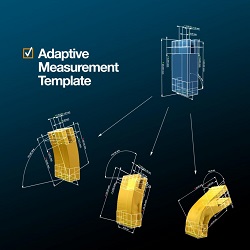
Leading software provider Volume Graphics, Germany, received a 2023 industry award for their Adaptive Measurement Template application that automatically compares original CAD intent against scan-based visualizations of parts, made with almost any material or manufacturing method, to assess quality and robustness. Volume Graphics’ Adaptive Measurement Templates has been named as one of the ten most innovative technologies for 2023 by a leading industry publication.