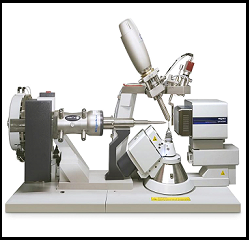
Rigaku, The Woodlands, Texas, introduces a new dual-wavelength single crystal system, the Rigaku XtaLAB Synergy-DW VHF dual-wavelength high-flux, rotating anode X-ray diffractometer. The new instrument was first announced in the April edition of Crystallography Times, the electronic newsletter published by Rigaku focusing on single crystal X-ray diffraction.
The XtaLAB Synergy-DW VHF design is an extension of a revolutionary idea introduced in 2004 with the Oxford Diffraction Gemini diffractometer, which featured two independent X-ray sources. The ground-breaking design enabled crystallographers to easily switch between copper and molybdenum wavelengths, greatly expanding the experimental flexibility available for analyzing single crystal samples. The new system retains the flexibility of the dual-wavelength capability, and adds the exceptional flux enhancement of a reliable rotating anode X-ray source.
Faster, more precise data collection is now possible because of the new system’s high-speed kappa goniometer, high-flux rotating anode X-ray source, fast low-noise X-ray detector, and optimized instrument control software. The ability to investigate small samples is further improved by the increased flux from the rotating anode X-ray source, as well as the extreme low noise of the Rigaku HyPix X-ray detectors.
Newly designed confocal optics enable the XtaLAB Synergy-DW VHF diffractometer to provide 50% more flux at the sample position over the previous DW model. The ability to configure it with two different wavelengths means that with a Cu/Mo anode, the XtaLAB Synergy-DW VHF instrument can be shared between structural biology and chemical crystallography groups. The system is positioned to be a no-compromise solution, to allow the sharing of resources when needed, for both protein and small molecule crystallographers.