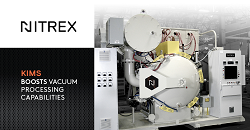
 Nitrex Vacuum, Quebec, Canada, has supplied a new vacuum furnace to the Korea Institute of Materials Science (KIMS) to enhance its vacuum heat-treating capabilities. The investment in the new furnace aims to support KIMS’ wide range of technological R&D activities.
This includes process improvements, application development, material enhancement, testing, and evaluation, to advance Korea’s scientific and industrial research and the country’s industrial capabilities.
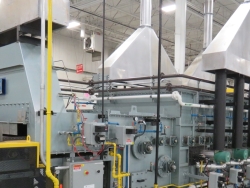
The NITREX vacuum furnace is a horizontal type 2-Bar external quench with a curved Moly wide band heating element arranged in a circular configuration around the main hot zone. Its work area measures 15″ in width by 15″ in height by 24″ in length (381 x 381 x 610 mm), and it has a heavy-duty “TZM” Molybdenum hearth assembly that supports high temperatures. The furnace’s ability to process superalloy and high-performance alloy components and enhance their structural and surface integrity is especially important for KIMS.
“The NITREX system not only offers this metallurgical advantage but is also robust, capable of running for years, and can support a wider range of R&D projects and metals,” said Nikola Dzepina, Nitrex Regional Manager – Asia. “With the ability to achieve higher vacuum levels with 10-6 Torr ultimate range, the furnace can heat-treat parts at temperatures up to 1,371°C (2,500°F), making it an excellent choice for processing parts that operate in extreme environments such as those found in the aerospace and precision part industries.”
The installation and startup of the vacuum furnace were overseen by NITREX’s local representative, Aerotech, and it has been in operation since December 2022. The furnace will support domestic companies, including Hanwha Aerospace, Doosan Enerbility, Sung-il Turbine, and Samjeong Turbine, in a development project that aims to improve the cycle efficiency of industrial land-based gas turbines. The acquisition of the NITREX vacuum furnace is expected to enhance KIMS’ capabilities and contribute to Korea’s industrial development.
Read more here