
In rats, a graphene “tattoo” stuck to the heart could treat an abnormally sluggish beat. Like a futuristic pacemaker, the device delivered electrical signals that kept the heart pumping properly.
Continue reading

In rats, a graphene “tattoo” stuck to the heart could treat an abnormally sluggish beat. Like a futuristic pacemaker, the device delivered electrical signals that kept the heart pumping properly.
Continue reading
The mechanics behind the collapse of soft materials structure have befuddled researchers for decades. In a new study, researchers uncover a metric that finally correlates microscopic-level processes with what is seen at the macroscopic level.
Continue reading
At the Forschungszentrum Jülich, a new kind of transistor from germanium–tin alloy has been fabricated by scientists. The alloy comes with many benefits over traditional switching elements.
Continue reading
Researchers at Sandia National Laboratories, Albuquerque, N.M., tested a variety of nickel mixtures as protective coatings to shield stainless steel from the corrosive threats posed by sea air.
Continue readingGeorgia Institute of Technology, Atlanta, one of the top public research universities in the U.S., and GlobalFoundries, Malta, NY., one of the world’s leading semiconductor manufacturers, announced a new partnership to expand collaboration on semiconductor research, education, talent, and workforce development.
Continue readingResearchers at The University of Texas at Austin have discovered more than a dozen different materials for 2D semiconductors that could allow electrons to quickly move around, opening the door for a leap in electronics’ capabilities.
Continue readingAn international team of researchers, led by Drexel University, has found that a thin coating of MXene could enhance a material’s ability to trap or shed heat.
Continue readingUsing the adhesive properties of ice, researchers have developed a transfer method to move large sheets of 2D materials without breaking them.
Continue readingResearchers have engineered a material with the potential to dramatically cut the amount of heat power plants release into the atmosphere.
Continue reading
Two University of Arizona engineers are using a new suite of equipment to develop alloys optimized to undergo both 3D printing and hypersonic flight.
Continue reading The Roman Colosseum is a giant, oval amphitheater built almost two thousand years ago. Despite its age and a 14th century earthquake that knocked down the south side of the colosseum, most of the 150-some foot building is still standing. Like many ancient Roman structures, parts of it were constructed using a specific type of concrete. Scientists and engineers have long suspected a key to these buildings’ durability is their use of this Roman concrete. But exactly how this sturdy concrete has contributed to the architecture’s strength has been a mystery to researchers across the globe.
A team of interdisciplinary researchers recently discovered a potential answer to why these ancient Roman buildings have been able to weather the test of time while many modern, concrete structures seem to crumble after a few decades.
The answer: self-healing concrete.
The material has three components: limestone, volcanic material and water. For years, architects and historians have speculated the volcanic material is what makes it strong — which it does. But it does not explain the material’s self-healing ability.
What the researchers found was that the self-healing properties might simply be a serendipitous manipulation of chemistry. The limestone in the concrete is likely the secret.
When the ancient Romans made mortar, they heated up the lime to turn it into a substance called “quicklime” – a very reactive chemical sibling to limestone. And, because they introduced water to the quicklime during mixing, the heat it produced set up a chemical foundation that could strengthen the concrete later.
When tiny cracks start to form later, the quicklime stops them from becoming bigger. When it rains, the lime reacts with the water to recrystallize as various forms of calcium carbonate, quickly filling the crack or reacting with volcanic ash to “heal” the material.
For materials scientist Ainissa Ramirez, this new understanding of ancient Roman concrete is a welcome discovery.
“This is one way that the material can be greener,” says Ramirez. “It’s sort of like a message in a bottle. The Romans made the material. We had to kind of figure out how they did it so that we can make better materials — and then, you know, in turn, be better stewards of our environment.”
For more information: Science Advances
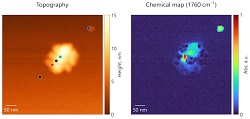 EAG Laboratories, San Diego, Calif., announced a new addition to its wide range of analytical techniques, NanoIR capabilities. NanoIR combines the nanometer scale spatial resolving capabilities of atomic force microscopy (AFM) with the chemical characterizing capabilities of infrared spectroscopy.
With this new capability, EAG scientists can provide clients with:
NanoIR spectra collected from the corresponding-colored locations indicated in the AFM image. Heterogeneities shown in the spectra are consistent with the chemical map, where the intensity of the PLGA ester peak (~1760 cm-1) varies across the particle and an additional ester species is detected (1730 cm-1).
Image – Data examples of PLGA nanoparticles deposited on mica. AFM height image (left) with colored markers indicating the corresponding analytical locations where spectra were obtained. A single wavenumber chemical map (right) taken at 1760 cm-1 reveals the ester-rich regions are detected only from the particles and are absent from the mica substrate. The chemical map highlights additional nanoscale heterogeneities that exist within the particles.
For more information:
EAG Laboratories
 Researchers at the Department of Energy’s Lawrence Berkeley National Laboratory (Berkeley Lab), Berkeley, Calif., discover that electrons play a surprising role in heat transfer between layers of semiconductors, with implications for next-generation electronic devices.
As semiconductor devices become ever smaller, researchers are exploring two-dimensional (2D) materials for potential applications in transistors and optoelectronics. Controlling the flow of electricity and heat through these materials is key to their functionality, but first we need to understand the details of those behaviors at atomic scales.
Curious about how electrons and atomic vibrations couple to one another when heat flows between two materials, zooming into the interface with atomic precision allowed the researchers to uncover a surprisingly efficient mechanism for their coupling.
“Our work shows that we need to go beyond the analogy of Lego blocks to understand stacks of disparate 2D materials, even though the layers aren’t strongly bonded to one another,” said Archana Raja, a scientist at Berkeley Lab at who led the study. “The seemingly distinct layers, in fact, communicate through shared electronic pathways, allowing us to access and eventually design properties that are greater than the sum of the parts.”
In stacked layers of the 2D semiconductor materials tungsten diselenide (WSe2) and tungsten disulfide (WS2), researchers found that although they aren’t tightly bonded to one another, electrons provide a bridge between them that facilitates rapid heat transfer.
The devices were fabricated by Raja’s group at Berkeley Lab’s Molecular Foundry, who perfected the art of using Scotch tape to lift off crystalline monolayers of the semiconductors, each less than a nanometer in thickness. Using polymer stamps aligned under a home-built stacking microscope, these layers were deposited on top of each other and precisely placed over a microscopic window to enable the transmission of electrons through the sample.
In experiments conducted at the Department of Energy’s SLAC National Accelerator Laboratory, the team used ultrafast electron diffraction (UED) to measure the temperatures of the individual layers while optically exciting electrons in just the WSe2 layer. The UED served as an “electron camera”, capturing the atom positions within each layer. By varying the time interval between the excitation and probing pulses by trillionths of a second, they could track the changing temperature of each layer independently, using theoretical simulations to convert the observed atomic movements into temperatures.
The UED approach enables a new way of directly measuring temperature within this complex heterostructure. Aaron Lindenberg, a co-author on the study at Stanford University said “These layers are only a few angstroms apart, and yet we can selectively probe their response and, as a result of the time resolution, can probe at fundamental time scales how energy is shared between these structures in a new way.”
They found that the WSe2 layer heated up, as expected, but to their surprise, the WS2 layer also heated up in tandem, suggesting a rapid transfer of heat between layers. By contrast, when they didn’t excite electrons in the WSe2 and heated the heterostructure using a metal contact layer instead, the interface between WSe2 and WS2 transmitted heat very poorly, confirming previous reports.
“It was very surprising to see the two layers heat up almost simultaneously after photoexcitation and it motivated us to zero in on a deeper understanding of what was going on,” said Raja.
To understand their observations, the team employed theoretical calculations, using methods based on density functional theory to model how atoms and electrons behave in these systems with support from the Center for Computational Study of Excited-State Phenomena in Energy Materials (C2SEPEM), a DOE-funded Computational Materials Science Center at Berkeley Lab.
The researchers conducted extensive calculations of the electronic structure of layered 2D WSe2/WS2, as well as the behavior of lattice vibrations within the layers. Like squirrels traversing a forest canopy, who can run along paths defined by branches and occasionally jump between them, electrons in a material are limited to specific states and transitions (known as scattering), and knowledge of that electronic structure provides a guide to interpreting the experimental results.
Using computer simulations, the team explored where the electron in one layer initially wanted to scatter to, due to lattice vibrations. They found that electrons wanted to scatter to a hybrid state – a kind of ‘glue state’ where the electron hangs out in both layers at the same time. Now the team has a good idea of what these glue states look like and their signatures to confidently say that other, 2D semiconductor heterostructures will behave the same way.
The study appeared recently in Nature Nanotechnology.
Image – Artistic depiction of electron transfer driven by an ultrashort laser pulse across an interface between two atomically-thin materials. This transfer is facilitated by an interlayer ‘bridge’ state that electrons are able to access due to lattice vibrations in both materials. Courtesy of: Gregory M. Stewart/SLAC.
For more information:
Lawrence Berkeley National Laboratory
U.S. Department of Energy’s Office of Science
Lindberg/MPH, has announced the shipment of an electrically heated, steam atmosphere pit furnace for steam treating parts. Manufacturers use the steam treating process to create a uniform blue-black finish on the surface of parts which improves wear and corrosion resistance.
Continue readingThe indirectly heated fluidized-bed furnace is heated electrically though a fluidized-bed furnace may also be gas heated. Fluidized beds have been designed to perform a wide variety of heat treating tasks including stress relieving, preheating, hardening, quenching, annealing, and tempering, as well as a variety of surface treatments such as carburizing, nitriding, and steam tempering.
Continue readingBodycote, Macclesfield, UK, has announced that its near-term science-based emissions target has been approved by the Science Based Targets initiative (SBTi). SBTi is an independent global body enabling businesses to set and validate emissions reduction targets in line with the latest climate science and strict criteria.
Continue readingSolar Atmospheres, Hermitage PA, has announced the approval of a critical Boeing specification for the oil quenching of alloy steels in accordance with Boeing’s specification BAC 5617.
Continue readingNitrex Vacuum, Quebec, Canada, has supplied a new vacuum furnace to the Korea Institute of Materials Science (KIMS) to enhance its vacuum heat-treating capabilities. The investment in the new furnace aims to support KIMS’ wide range of technological R&D activities.
Continue reading
A Missouri S&T research team was recently awarded a $2 million grant from the United States Department of Energy to research technologies to improve the operating efficiency of electric arc furnaces (EAFs) used for steelmaking.
“It takes a tremendous amount of power to run an EAF, and we are looking for new ways to lower that energy footprint,” says Dr. Ronald O’Malley, the F. Kenneth Iverson Endowed Chair of Steelmaking Technologies and director of the Kent D. Peaslee Steel Manufacturing Research Center at Missouri S&T. “We are working toward implementing a next-generation dynamic control system for the EAF so we can optimize EAF operating efficiency under changing input conditions using new sensor systems.”
The project is titled “Intelligent Dynamic EAF Advisory System (IDEAS) for Improving EAF Operating Efficiency.” This $2 million grant is part of a larger three-phase project.
For the first phase, the research team assessed the current systems in place at the two steel plants that are partners in the study and developed the conceptual framework for the future aspects of the project.
This stage required significant data analysis for the process, integration of existing control modules already in place, implementation of new control modules and development and testing of new fiber optic sensing technologies in the lab for use in the EAF.
In Phase 2, the new fiber optic sensing technologies will be implemented in the plants along with new control systems, directed energy input and EAF slag property models.
“In basic terms, the fiber optic system will provide a whole new set of tools for EAF optimization,” O’Malley says. “We will be able to better examine the condition of the EAF and the impact of operating variables on the process in real time to provide feedback to the operator and improve energy efficiency, operating cost and yield.”
The new sensor technology and control modules will be installed at the two partner steel plants, which are Big River Steel in Osceola, Arkansas, and Commercial Metals Company (CMC) in Birmingham, Alabama.
After that, the systems will go live, and the data collection process will begin. Throughout the process, the plant employees will be trained on how to use the new technology. Then, in the final stage, the researchers will analyze the performance improvements in progress and determine what changes should be implemented to further improve the system.
“Something people should also appreciate about this project is the benefits to the student researchers involved,” says O’Malley. “S&T and ASU will have a team of undergraduate and graduate students working on this project. You can’t beat the hands-on experience that this will provide for our students.”
For more information: Missouri University of Science and Technology
Photo: Dr. Ron O’Malley, a professor at Missouri S&T, is leading a study to improve the energy footprint associated with electric arc furnaces. Photo by Michael Pierce/Missouri S&T.

Scientists at the University of Auckland, New Zealand, are working at the level of atoms to create something unexpected: tiny metallic snowflakes. During their research, they discovered that interactions between the atomistic structures of various metals and liquid gallium cause differently shaped crystals to emerge.
Continue reading
Researchers at the University of Chicago’s Pritzker School of Molecular Engineering (PME) have now used a combination of high-powered electron microscopy and computational modeling to understand exactly what occurs, on an atomic level, when lithium-ion batteries degrade. Their research points toward one approach to designing longer-lasting lithium-ion batteries—by focusing on the carbon binder domain (CBD).
Continue reading
Solar Atmospheres of Wstern Pennsylvania, Hermitage, has had a hand in heat treating several critical parts for NASA’s unmanned Orion spacecraft that launched successfully from Cape Canaveral for a six-week test flight around the moon and back.
Continue reading
Sintering refers to joining particles through the combined actions of pressure and heating. The pressed material is heated to below its melting point, and binding between particles occurs due to chemical diffusion between the particles. Further comminution and sieving is necessary to achieve the required particle size distribution. The fabrication of metal shapes from small particles by sintering is a 1000 year old technology. The sintering of metal and ceramics on a large scale is a more recent development that is mainly used for cermets, components made from a combination of metal and ceramics. The Co/WC class of materials are produced by these methods.
The image indicates that the individual particles become coherently joined in combination with some residual porosity during sintering. Porosity may be reduced by employing higher compaction pressures, higher sintering temperatures, and longer sintering times. However, such changes may be counterproductive in subsequent milling operations, because the strength of the product is greatly increased.
Sintered products normally involve processes that include powder production, shaping of the component from the powder, and strengthening of the powder agglomerate by heat treatment. The production of sintered powders can be considered a scaled-down version for producing engineered components.
Prior to sintering, components are heated to a temperature sufficient to evaporate any volatile components. Sintering is generally based on heating the green component to a temperature above the melting point of at least one of the powder constituents. The process must be completed in a reducing atmosphere or in a vacuum furnace.
It is first necessary to produce the powers of the appropriate chemistry that will be sintered into the desired feedstock. Powder production methods can be classified as either chemical or mechanical processes. The chemical routes include reduction, precipitation, chemical reaction, and electrolysis. The mechanical route includes atomization and disintegration. The reduction method produces powders from oxides of metals with high melting points. The most common reducing media are hydrogen and carbon. The reduced particles sinter together into a spongy mass that is crushed into a powder.
Large quantities of iron powders are produced using the carbon route. A typical precipitation method includes preparation of a carbonyl vapor by passing carbon monoxide at a high temperature over the heated metal. Precipitation of the vapor gives rise to a powder.
Powders are also produced by disintegration of a molten metal by a gas jet or water at high pressure (i.e., atomization). The key methods of producing powder are the atomization process and the reduction process.
Sintered powders exhibit agglomerated morphologies that are not spherical but can be described as being globular with many protuberances on the surface. It may be expected that such a powder is difficult to feed. This is generally true, but the thermal spray parameters for that particular material would be optimized, so these powders are technologically viable. A more important aspect is that the theoretical density of sintered powders is lower than powders obtained from the fused and crushed routes.
Because there is an empirical relationship that relates low densities to low tensile adhesion strengths, then agglomerated powders (or spray-dried and sintered powders) may exhibit lower strengths if their initial low density is reflected in the coating. It is emphasized that such powders are still acceptable for their intended applications and may have the additional benefit of being a lower-cost feedstock material.
The primary advantage of sintering for powder production is that it enhances particle strength so they retain their dimensions during transport to the TS source, as well as during their history within the intense thermal process zone. The sintering process results in some dimensional changes; however, these are not detrimental to the TS feedstock preparation because there will be a subsequent sieving operation.
Image – Sintering of particles.
This information is from ASM Handbooks Online, Vol. 5A: Thermal Spray Technology, Coating Structures, Properties, and Materials. To find this information (subscription required), click on the link below and scroll down to Figure 3.
https://dl.asminternational.org/handbooks/edited-volume/12/chapter/133823/Feedstock-Material-Considerations-for-Thermal

Each year, the United States spends almost a trillion dollars trying to combat metallic corrosion, an electrochemical reaction which occurs when metals oxidize and begin to rust. Now, a team of researchers led by the Ohio State University (OSU) has estimated how much corrosion is gradually worsening global carbon emissions.
Although earlier research has already estimated the economic cost of corrosion to be about three to four percent of United States’ gross domestic product, this is the first study to quantify the environmental impact associated with steel corrosion.
Global steel production has increased steadily for decades and, since steel has poor resistance to corrosion, part of that demand is to replace steel from construction materials that have become corroded over time. According to the experts, reducing the amount of steel which needs to be replaced due to corrosion could have significant effects on the amount of greenhouse gases produced to make steel.
“Given society’s reliance on coal fuel, iron and steel production is one of the largest greenhouse gases emitters of any industry. But most of the costs associated with the industry stem from the energy that goes into creating steel, and that energy is lost as the steel reverts to rust, which is like its original form of iron ore,” explained study senior author Gerald Frankel, a professor of Materials Science and Engineering at OSU.
By using historical carbon dioxide intensity data in order to estimate CO2 levels per year starting from 1960, the scientists found that, in 2021, steel production accounted for 27 percent of the carbon emissions of the global manufacturing sector, and approximately 10.5 percent of the total carbon emissions worldwide, while corroded steel emissions accounted for about 1.6 to 3.4 percent of emissions.
Fortunately, due to regulations placed on the steel industry, technological advancements in the steel industry have resulted in a 61 percent reduction in energy consumption over the past half a century. Nonetheless, policy makers and industry officials should still act urgently to amend and coordinate international policy concerning steel production and corrosion management.
“Coordinated international strategies, as well as decreasing global steel demand, by using best practices for corrosion mitigation, could better improve global corrosion management strategies and drastically reduce the rise in greenhouse gas emissions we’re seeing due to repeatedly replacing corroded steel,” Frankel said.
If such actions are not undertaken soon, greenhouse emissions caused by the steel industry could spike to 27.5 percent of the global carbon emissions by as early as 2030, with corroded steel representing four to nine percent of that number. This could have dire impacts on the Earth’s climate.
“Global warming is a societal challenge that takes coordination of a lot of multidisciplinary approaches. Our work is bringing to light an issue that seems to have gone under the radar in terms of the importance of adding to the problem,” Frankel concluded.
For more information: npj Materials Degradation

Scientists have found the secret behind a property of solid materials known as ferroelectrics, showing that quasiparticles moving in wave-like patterns among vibrating atoms carry enough heat to turn the material into a thermal switch when an electrical field is applied externally.
A key finding of the study is that this control of thermal conductivity is attributable to the structure of the material rather than any random collisions among atoms. Specifically, the researchers describe quasiparticles called ferrons whose polarization changes as they “wiggle” in between vibrating atoms – and it’s that ordered wiggling and polarization, receptive to the externally applied electrical field, that dictates the material’s ability to transfer the heat at a different rate.
“We figured out that this change in position of these atoms, and the change of the nature of the vibrations, must carry heat, and therefore the external field which changes this vibration must affect the thermal conductivity,” said senior author Joseph Heremans, professor of mechanical and aerospace engineering, materials science and engineering, and physics at The Ohio State University. “People tend to think atom vibrations are a given fact and don’t respond to an electric field or a magnetic field. And we are saying you can affect them with an electric field.”
With the use of a simple external electrical stimulus, the thermal conductivity in this type of material can be changed at room temperature rather than at the extremely low temperatures required to control most candidate materials for solid-state heat switches, enhancing the possibilities for real-world applications of the technology, the researchers say.
The material used in the study is a common lead zirconium titanate ceramic belonging to a class of materials called piezoelectrics, which change shape when an electric field is applied to them or produce an electrical charge under mechanical stress.
Ferroelectrics, a subset of piezoelectrics, are materials in which the electrical charges on the atoms can spontaneously form electrical dipoles that all align in the same direction, forming what is known as polarization. These dipoles can be switched by an external electric field.
“The quasiparticle has always been there. It just hasn’t been identified and measured,” said first author Brandi Wooten, a PhD student in materials science and engineering at Ohio State.
Wooten likened ferrons’ behavior to a stadium wave, with each sports fan representing a cell of atoms collected together in a crystal.
This heat-transferring property is induced by the electric field through a phenomenon known as the piezoelectric strain: The lattice contracts or stretches when the voltage is applied, with atoms and forces between them moving back and forth, ultimately changing the mechanical properties of the material and, as a result, changing its thermal conductivity, said Heremans, also an Ohio Eminent Scholar in Nanotechnology.
“The ferron is also sensitive to strain in the solid. Since the ferron carries heat, that makes the amount of heat carried dependent on the electrical field,” he said. “So, we wrote a new theory that relates an external electric field, the strain it induces in a ferroelectric, and ultimately how this strain affects the thermal conductivity.”
The theory is predictive, so researchers can now use it to find materials where the effect is much larger, ultimately leading to materials where it is large enough to be used in heat switches in everyday applications, like collection of solar power.
The application of an electrical field to the material produced a 2 percent difference between maximum and minimum conductivity – as the new theory predicted would be the case. A series of experiments quantifying the atomic vibrations through measuring the velocity of the material’s sound waves and equilibrium and transport properties validated “that this all depends only on the material structure, not necessarily what’s scattering the vibrations,” Wooten said.
The researchers are now studying other materials that might increase that change in thermal conductivity by up to 15%, as the new theory predicts.
For more information: Science Advances
A Missouri S&T research team was recently awarded a $2 million grant from the United States Department of Energy to research technologies to improve the operating efficiency of electric arc furnaces (EAFs) used for steelmaking.
“It takes a tremendous amount of power to run an EAF, and we are looking for new ways to lower that energy footprint,” says Dr. Ronald O’Malley, the F. Kenneth Iverson Endowed Chair of Steelmaking Technologies and director of the Kent D. Peaslee Steel Manufacturing Research Center at Missouri S&T. “We are working toward implementing a next-generation dynamic control system for the EAF so we can optimize EAF operating efficiency under changing input conditions using new sensor systems.”
The project is titled “Intelligent Dynamic EAF Advisory System (IDEAS) for Improving EAF Operating Efficiency.” This $2 million grant is part of a larger three-phase project.
For the first phase, the research team assessed the current systems in place at the two steel plants that are partners in the study and developed the conceptual framework for the future aspects of the project.
This stage required significant data analysis for the process, integration of existing control modules already in place, implementation of new control modules and development and testing of new fiber optic sensing technologies in the lab for use in the EAF.
In Phase 2, the new fiber optic sensing technologies will be implemented in the plants along with new control systems, directed energy input and EAF slag property models.
“In basic terms, the fiber optic system will provide a whole new set of tools for EAF optimization,” O’Malley says. “We will be able to better examine the condition of the EAF and the impact of operating variables on the process in real time to provide feedback to the operator and improve energy efficiency, operating cost and yield.”
The new sensor technology and control modules will be installed at the two partner steel plants, which are Big River Steel in Osceola, Arkansas, and Commercial Metals Company (CMC) in Birmingham, Alabama.
After that, the systems will go live, and the data collection process will begin. Throughout the process, the plant employees will be trained on how to use the new technology. Then, in the final stage, the researchers will analyze the performance improvements in progress and determine what changes should be implemented to further improve the system.
“Something people should also appreciate about this project is the benefits to the student researchers involved,” says O’Malley. “S&T and ASU will have a team of undergraduate and graduate students working on this project. You can’t beat the hands-on experience that this will provide for our students.”
For more information: Missouri University of Science and Technology
Photo: Dr. Ron O’Malley, a professor at Missouri S&T, is leading a study to improve the energy footprint associated with electric arc furnaces. Photo by Michael Pierce/Missouri S&T.
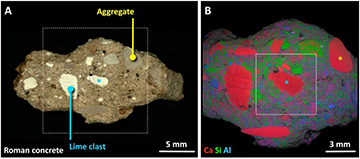 Researchers have spent decades trying to figure out the secret of Rome’s ultradurable ancient construction material, used in the famed Pantheon as well as aqueducts and seawalls that endured especially harsh environmental conditions. Now, a team of investigators from MIT, Harvard University, and laboratories in Italy and Switzerland, has made progress in this field, discovering ancient concrete-manufacturing strategies that incorporated several key self-healing functionalities.
For many years, researchers have assumed that the key to the ancient concrete’s durability was based on one ingredient: pozzolanic material such as volcanic ash from the area of Pozzuoli, on the Bay of Naples. This specific kind of ash was even shipped all across the vast Roman empire to be used in construction, and was described as a key ingredient for concrete in accounts by architects and historians at the time.
Under closer examination, these ancient samples also contain small, distinctive, millimeter-scale bright white mineral features, which have been long recognized as a ubiquitous component of Roman concretes. These white chunks, often referred to as “lime clasts,” originate from lime, another key component of the ancient concrete mix.
Upon further characterization of these lime clasts, using high-resolution multiscale imaging and chemical mapping techniques pioneered in Professor Admir Masic’s research lab at MIT, the researchers gained new insights into the potential functionality of these lime clasts.
Studying samples of this ancient concrete, he and his team determined that the white inclusions were made out of various forms of calcium carbonate. And spectroscopic examination provided clues that these had been formed at extreme temperatures, as would be expected from the exothermic reaction produced by using quicklime instead of, or in addition to, the slaked lime in the mixture. Hot mixing, the team has now concluded, was actually the key to the super-durable nature.
During the hot mixing process, the lime clasts develop a characteristically brittle nanoparticulate architecture, creating an easily fractured and reactive calcium source, which, as the team proposed, could provide a critical self-healing functionality. As soon as tiny cracks start to form within the concrete, they can preferentially travel through the high-surface-area lime clasts. This material can then react with water, creating a calcium-saturated solution, which can recrystallize as calcium carbonate and quickly fill the crack, or react with pozzolanic materials to further strengthen the composite material. These reactions take place spontaneously and therefore automatically heal the cracks before they spread. Previous support for this hypothesis was found through the examination of other Roman concrete samples that exhibited calcite-filled cracks.
To prove that this was indeed the mechanism responsible for the durability of the Roman concrete, the team produced samples of hot-mixed concrete that incorporated both ancient and modern formulations, deliberately cracked them, and then ran water through the cracks. Sure enough: Within two weeks the cracks had completely healed and the water could no longer flow. An identical chunk of concrete made without quicklime never healed, and the water just kept flowing through the sample. As a result of these successful tests, the team is working to commercialize this modified cement material.
Through the extended functional lifespan and the development of lighter-weight concrete forms, Masic hopes that these efforts could help reduce the environmental impact of cement production, which currently accounts for about 8% of global greenhouse gas emissions. Along with other new formulations, such as concrete that can actually absorb carbon dioxide from the air, another current research focus of the Masic lab, these improvements could help to reduce concrete’s global impact.
Image – Compositional and morphological characterization of ancient and modern lime clasts. (a) Optical micrographs showing the conspicuous bright white color of the lime clasts, which can easily be identified from large-area elemental mapping via SEM-EDS (b). Courtesy of Science Advances (2023). DOI: 10.1126/sciadv.add1602.
************
For more information:
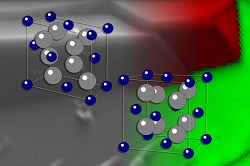 Massachusetts Institute of Technology, Boston, MA, has announced the discovery of a new category of shape-memory materials that could open up a new range of applications, especially for high-temperature settings, such as actuators inside a jet engine or a deep borehole.
Shape-memory metals have long been used as simple actuators in a variety of devices but are limited by the achievable service temperatures of the metals used, usually a few hundred degrees Celsius at most. Ceramics can withstand much higher temperatures, sometimes up to thousands of degrees, but are known for their brittleness. Now, the MIT team has found a way to overcome that and produce a ceramic material that can actuate without accumulating damage, thus making it possible for it to function reliably as a shape-memory material through many cycles of use.
Read further here: https://news.mit.edu/2022/shape-memory-material-ceramic-1005
 Johnson Matthey, UK, has announced that their technology has enabled Fulcrum’s Sierra BioFuels Plant to successfully produce synthetic crude oil for clean transportation fuels.
Using Johnson Matthey (JM) and BP’s FT CANS technology, the Sierra plant is the world’s first commercial-scale plant to use household rubbish as a feedstock that would otherwise be destined for landfill. The plant will produce synthetic crude oil, which is expected to ultimately be refined to approximately 11 million gallons of renewable, low-carbon transportation fuels each year from approximately 175,000 tons of landfill waste. JM and bp signed their first license with waste-to-fuels developer Fulcrum to use their award-winning FT CANS technology in 2018.
Read further here.
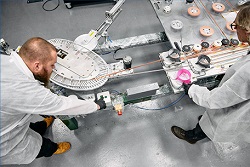 Furukawa Electric, Japan, has signed an agreement with Tokamak Energy to supply specialist high temperature superconducting (HTS) wire for its new advanced prototype fusion device, ST80-HTS.
Furukawa Electric Co., LtdTokyo, Japan and SuperPower Inc, New York, USA of Furukawa Electric Group, are expected to deliver more than several hundred kilometers of wire to the Oxford-based company for the next phase of construction. ST80-HTS will be the world’s first high field spherical tokamak using HTS magnets at scale and will utilize HTS wire developed and supplied by Furukawa Electric Group. This is a key stage in the path to Tokamak Energy’s fusion pilot plant which will demonstrate the capability to deliver clean electricity into the grid in the early 2030s, producing up to 200 MW of net electrical power.
HTS magnets are an essential enabler for the low cost, commercial operation and global deployment of spherical tokamak devices. They are essential for confining the fuel, which reaches temperatures above 100 million degrees Celsius. Tokamak Energy and Furukawa Electric Group are respectively leaders in the fields of HTS magnet design and superconducting wire development.
Read further here.